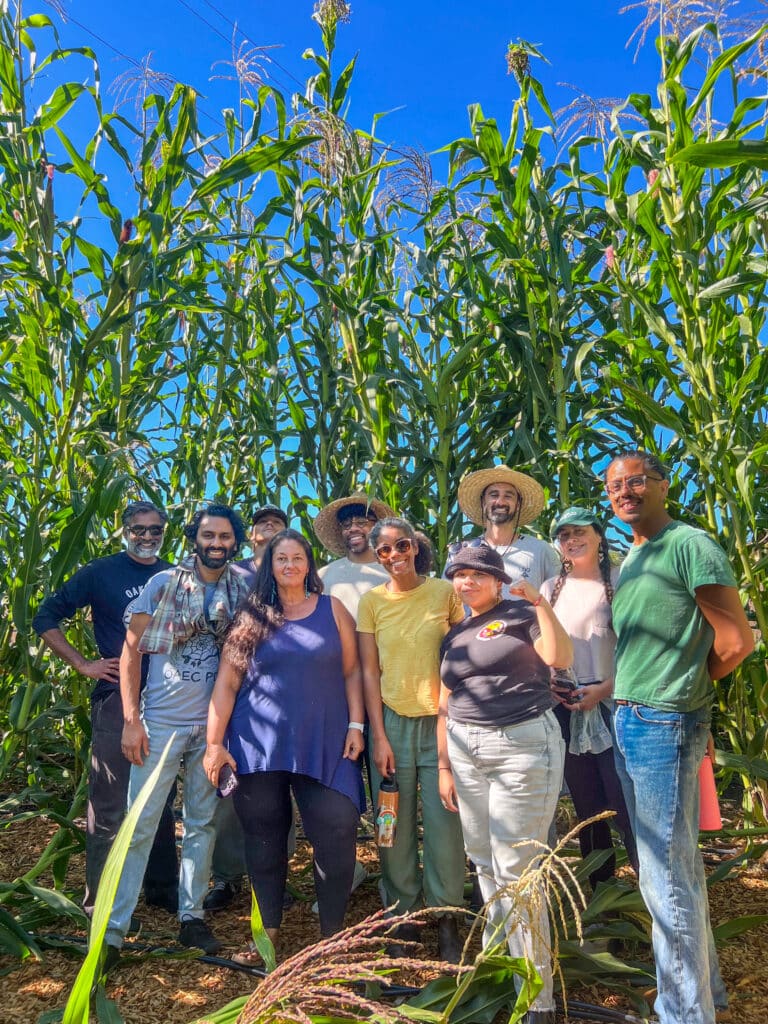
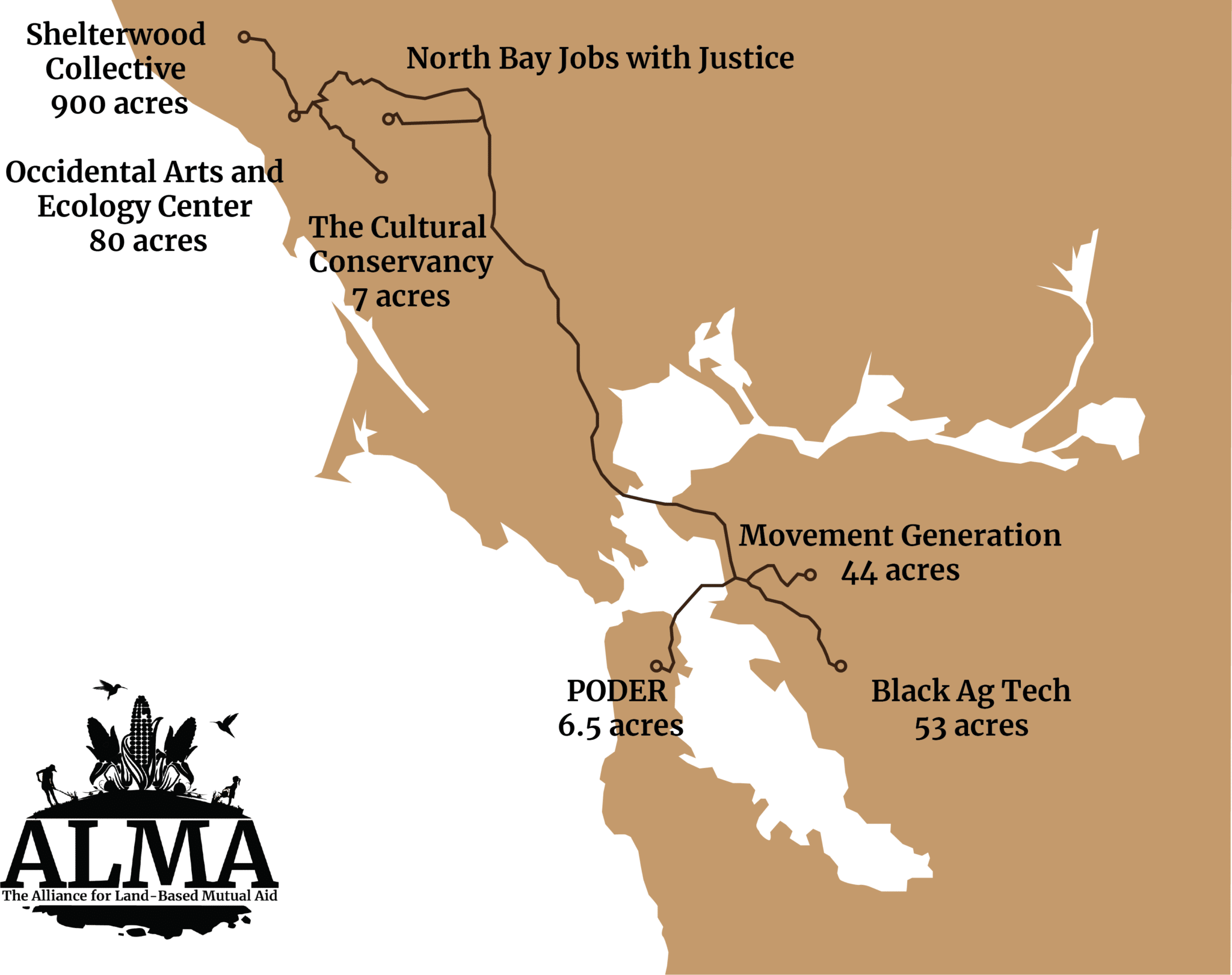
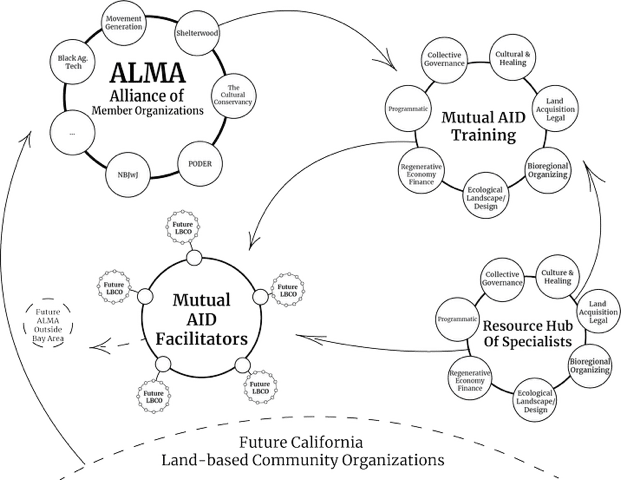
The Alliance for Land-based Mutual Aid (ALMA) is a bioregional network of community land-based projects across the broader Bay Area. Together, the seven founding community organizations (Black Ag Tech, Movement Generation, North Bay Jobs with Justice, PODER, Shelterwood Collective, The Cultural Conservancy, and OAEC) tend over 1000 acres of Bay Area land. ALMA was created to support the long-term success of community land-based projects by developing its four pillars: 1) Trans-local Alliance Building, 2) Community Land-based Mutual Aid Training Program, 3) Mutual Aid Facilitators Network, and 4) Resource Hub of Specialists. Through these efforts, ALMA aims to weave this work into the larger Just Transition movement towards a bio-regional movement in which both ecological resilience and social justice are possible. Our alliance is grounded in cultural wisdom, ecological and social justice, collective governance, and mutual aid.
ALMAs Theory of Change
Ecological Justice: “Remembering Our Way Forward”
By directly applying our knowledge of home (Ecology) towards the public manifestation of love (Justice), we are remembering and rebuilding our rightful place in living systems—the living systems we are a part of, not apart from. As we collectively build the knowledge of how to sustain the cycles that sustain us (water cycle, carbon cycle…), we are “remembering our way forward” and living into the world we want to co-create.
Mutual Aid Re(Life)sourcing: “Cooperation, not competition, is the key to our survival.”
Mutual aid is a cooperation-forward social organizing approach inextricably tied to communal self-governance and land sovereignty. Our mutual aid work recognizes that the basis of cooperation is that we all have fundamental needs, and that we cannot meet those needs without each other. Our collective gaps are a gift because they require us to be in mutually interdependent relationships with each other—this requires cooperation. As we navigate the contradictions of living in an extractive economy, we are building a moral compass and a community of practice centering mutual aid by actively building the world we want to live in—where communities have control over the decisions that affect their daily lives. “From each according to their ability, to each according to their needs”.
Trans-local and Bioregional Organizing: “Aggregating to Scale”
The scale, pace, and implications of the current ecological and social crises are overwhelming. What if we were to look at scale differently? Rather than addressing the crises by intervening with global-scale technologies, we can focus on trans-local and bioregional organizing. This emerging movement strategy led by frontline communities advocates for something different. By intervening at bioregional scales, interdependent mutual-aid communities can aggregate their efforts across larger geographic regions.
ALMA is actively building a trans-local and bioregional alliance by developing a unified vision with shared values, aligned strategies, and common frames amongst our alliance members. Our goal is to build land-based communities that are decentralized enough to address local challenges and centralized enough to effect change within larger geographic regions. ALMA is working to function as a ‘seed library’ of community land-based projects—as the alliance grows, we will develop a more extensive reservoir of land-based community knowledge that would be made accessible to those looking for support as they acquire, develop, and build their land-based projects. “The scale of the problem does not dictate the scale of the solution”.
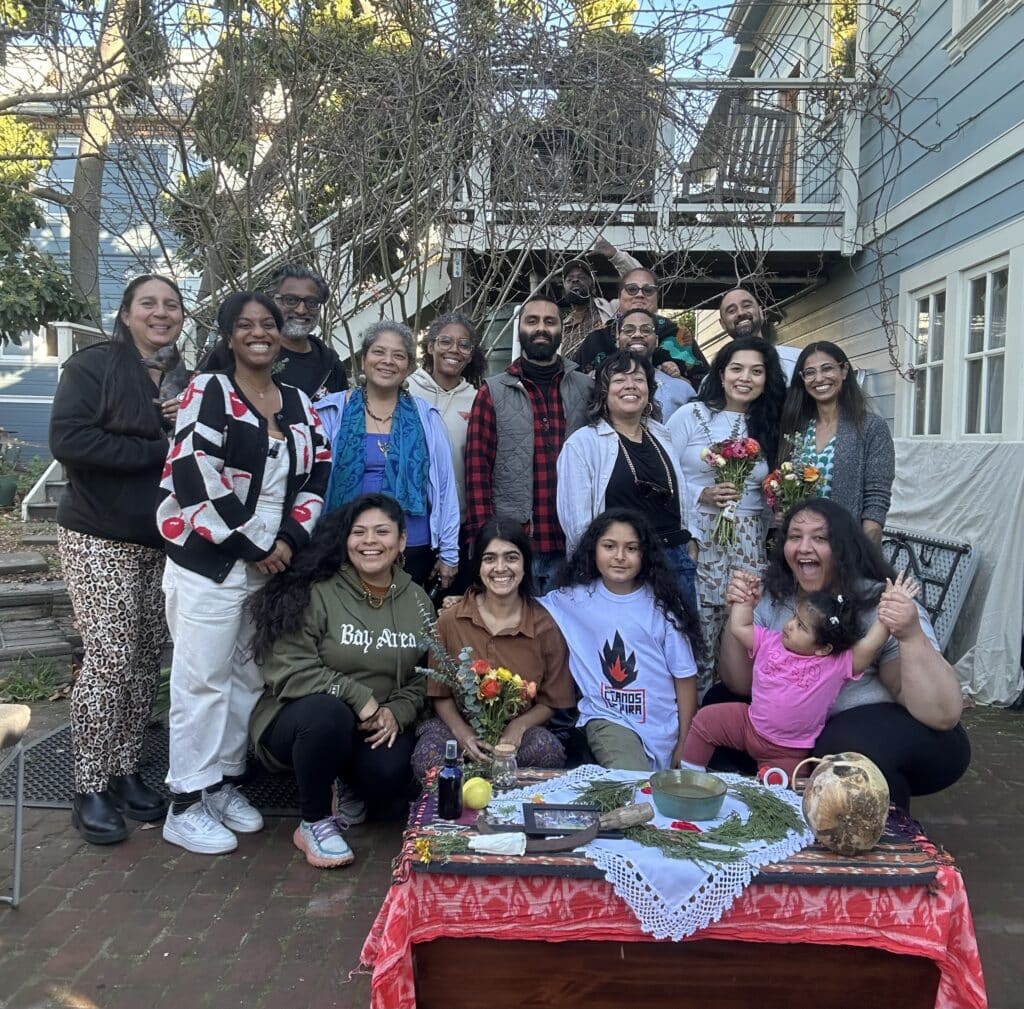
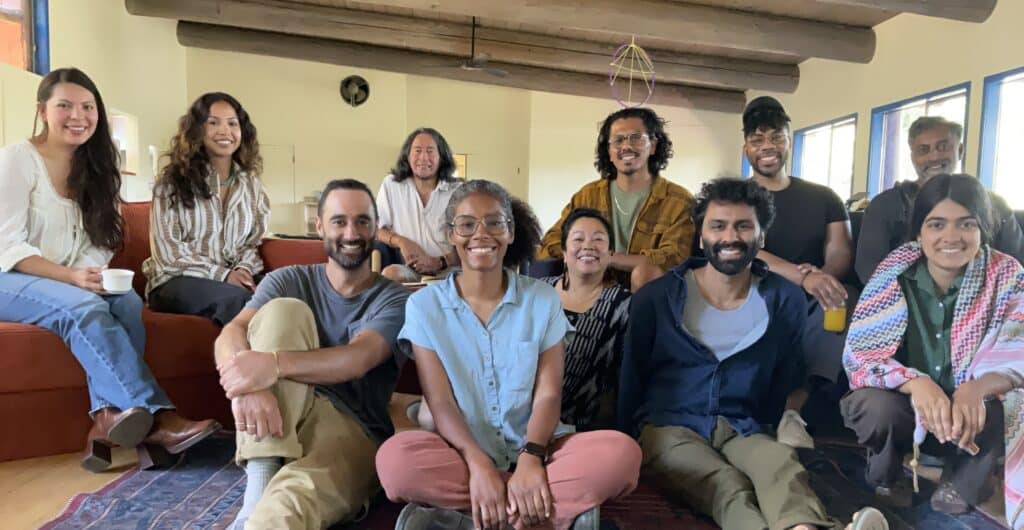
ALMA Alliance during its Quarterly Collective Governance Meetings
Land and Labor Acknowledgment
ALMA resides on the traditional and unceded territories of many indigenous peoples: Ohlone, Pomo, Kashaya, Me-wuk, Graton Rancheria, Yokuts, Ramaytush, Karkin, Confederated Villages of Lisjan, Wappo, Muwekma, and many others who have traveled and tended these remarkable lands for time immemorial. We are here WITH this land because of the relationships that indigenous people have kept sacred for generations. We are also here because of the forced labor of displaced, missionized, enslaved people, including the Indigenous people kidnapped from the continent of Africa and forced into chattel slavery on Turtle Island. We acknowledge the labor of the careworkers, farmworkers, and all the people who make our human communities possible, who are largely made up of their descendants and those who have been forced to leave and migrate from their indigenous lands from across the world. In this work that we do, we acknowledge and honor their legacy and the lifeways that they keep alive. We are not only honoring, but maintaining those relationships today.
This land and labor acknowledgement is also a solidarity statement with our ancestors – those who have our backs, who are proud of us for gathering here today, who are calling us to remember. We’re still here.
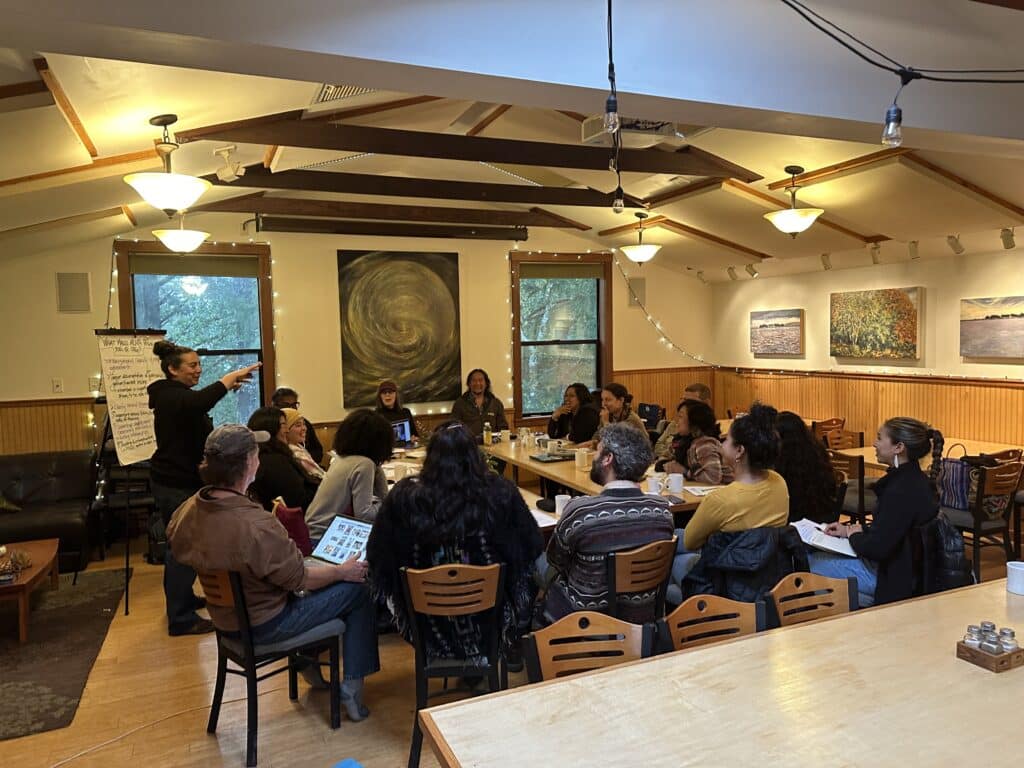
ALMA’s first gathering in March 2024
Why ALMA?
For 500 years, Indigenous, Black, migrant, and other oppressed groups have struggled to regain access to and care for land on Turtle Island. In the last decade in the greater Bay Area, more than a dozen community organizations have secured long-term access (either ownership or long-term leases) to substantial areas of land and are starting the long work of listening and tending, while re-weaving collective-governance and economy. ALMA has emerged out of the need for training, solidarity, and organizing to sustain this growing movement of community land access so that these projects can thrive for generations to come.
The social-political-ecological process of becoming a land-based community is complex, requiring collaboration between many specialists that few communities have access to. Communities that want to access land need experienced assistance in the legal, financial, local politics and code compliance, governance, economy, programmatic, ecological stewardship, and advocacy areas. In the area of ecological stewardship, the need for land-based design and management consultation has far outstripped the capacity of the small number of experienced practitioners. To support the emerging community land movement, ALMA has developed our four pillars (Alliance, Training Program, Facilitators Network, and Resource Hub) that can offer the broad support communities need to succeed in starting and sustaining a land-based project.
Our Work
Alliance Building – ALMA envisions a strong and vibrant network of land-based community organizations throughout the San Francisco Bay Area that extends out to other bioregions around the country and world. The founding members are creating governance structures and laying the groundwork to build upon as the movement grows.
Mutual Aid Training – ALMA is building the capacity of land-based projects to succeed in the long term by providing trainings in topics such as community governance, land acquisition/legal, ecological land-tending skills, economy/finance, cultural healing work, and more. Through this sharing of knowledge, we are healing our relationships to the land and to each other.
Mutual Aid Network – ALMA’s Mutual Aid Network will function similarly to a “seed library” of shared knowledge that communities can access to support the fast-growing Just Transition movement. As the alliance grows, it will develop a more extensive reservoir of land-based community knowledge (seeds), easily accessible to those seeking support as they acquire, develop, and build their projects.
Resource Hub – Because becoming a land-based community is complex, requiring collaboration between many specialists that few communities have access to, ALMA understands that it will require technical support from outside of the alliance. Communities that want to access land need experienced assistance in the legal, financial, local politics and code compliance, governance, economy, programmatic, ecological stewardship, and advocacy areas. For this reason, we are developing our Resource Hub of Specialists that we can draw upon when needed.
For more information, please contact Daniel Hensel Parra at [email protected].