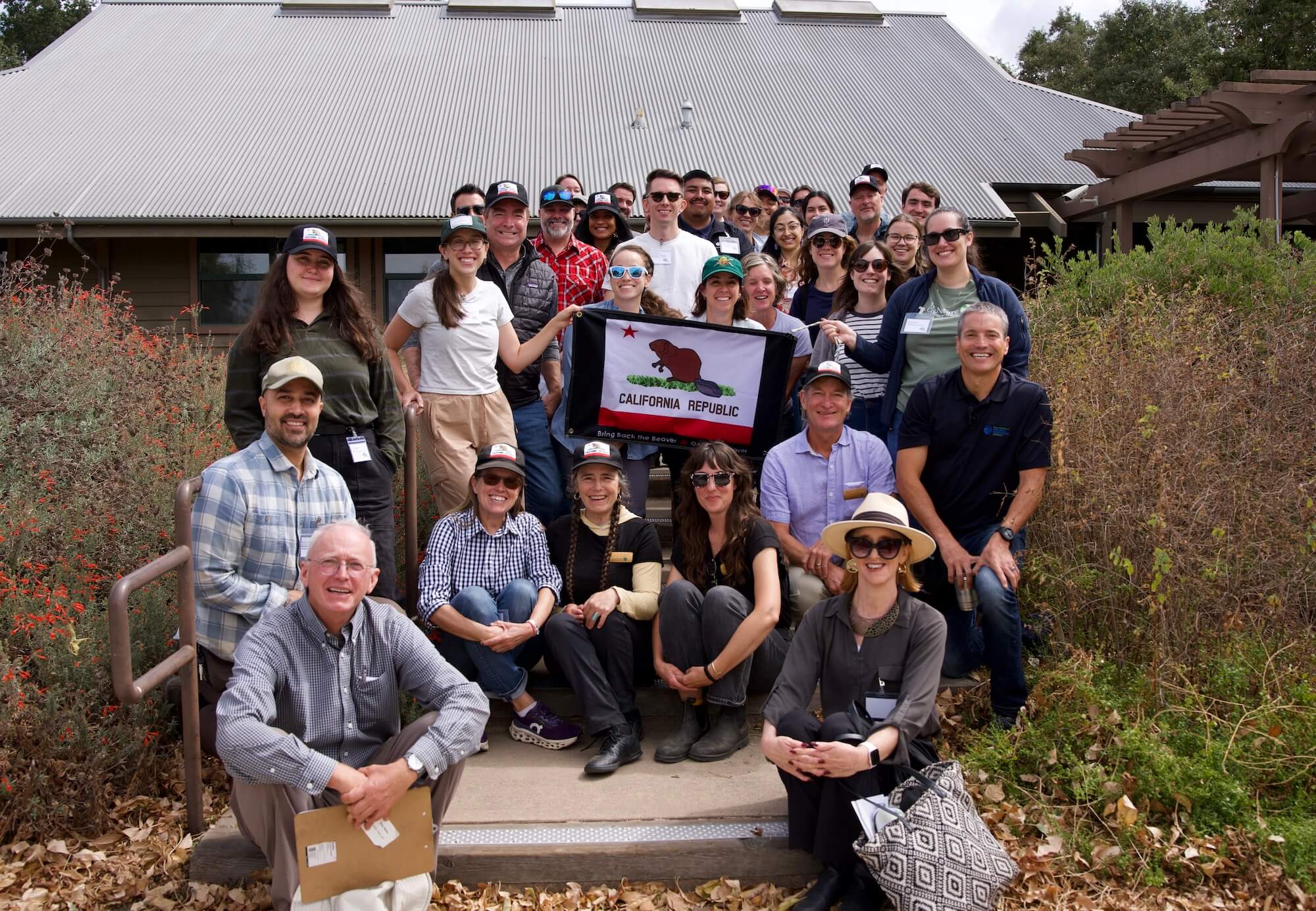
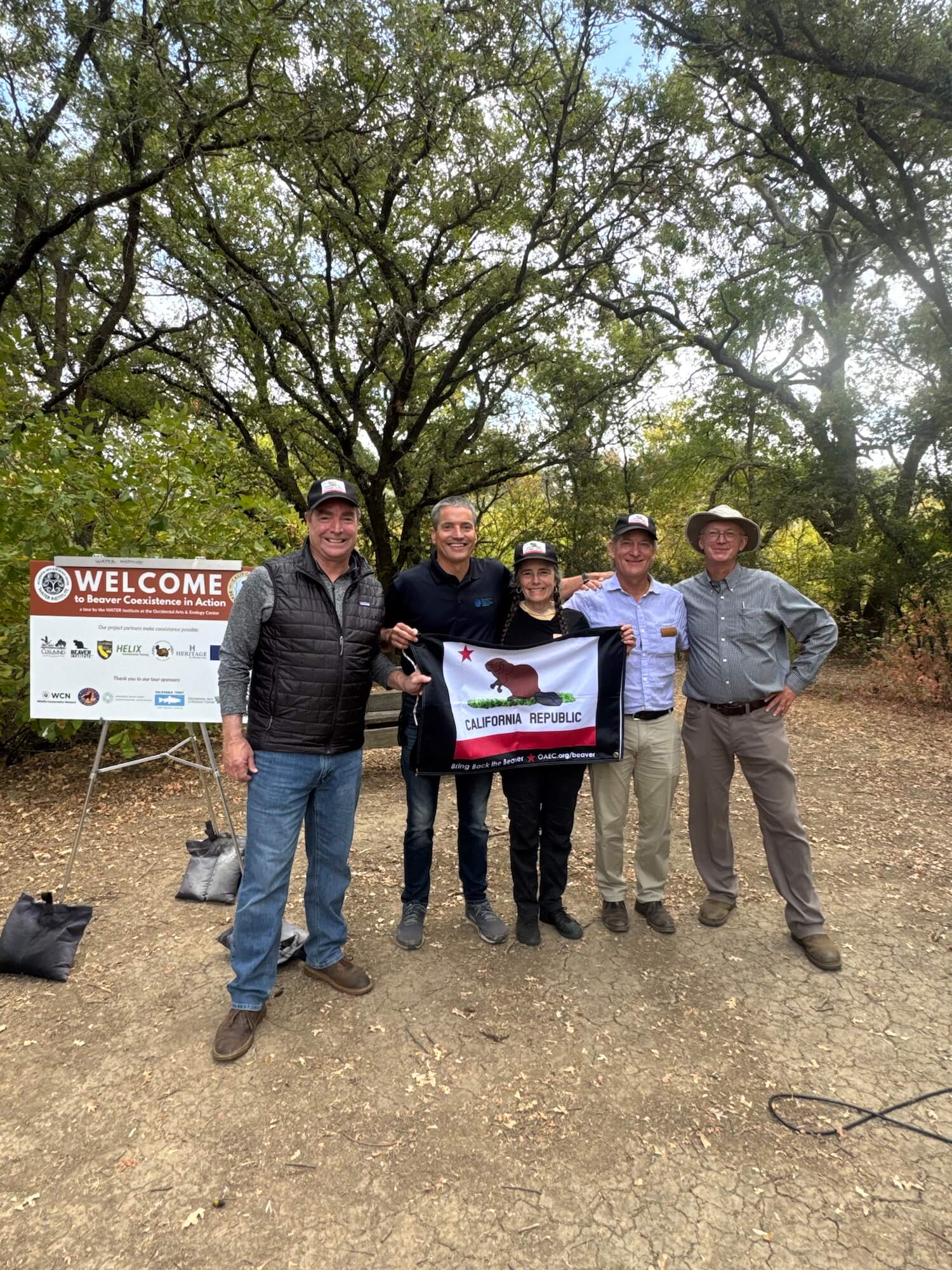
This September, the Occidental Arts & Ecology Center WATER Institute organized Beaver Coexistence in Action. This educational field tour introduced 55 policymakers and state leaders to our highly effective coexistence pilot projects at the Cosumnes River Preserve and a neighborhood in the Sierra foothills. The event offered state leaders a firsthand look at successful coexistence in sites typifying some of California’s most climate change-impacted and beaver conflict-prone regions: the Central Valley and the Sierra foothills.
The strong support from influential tour attendees is poised to keep beaver coexistence moving forward as a well-established part of California’s climate and conservation strategy.
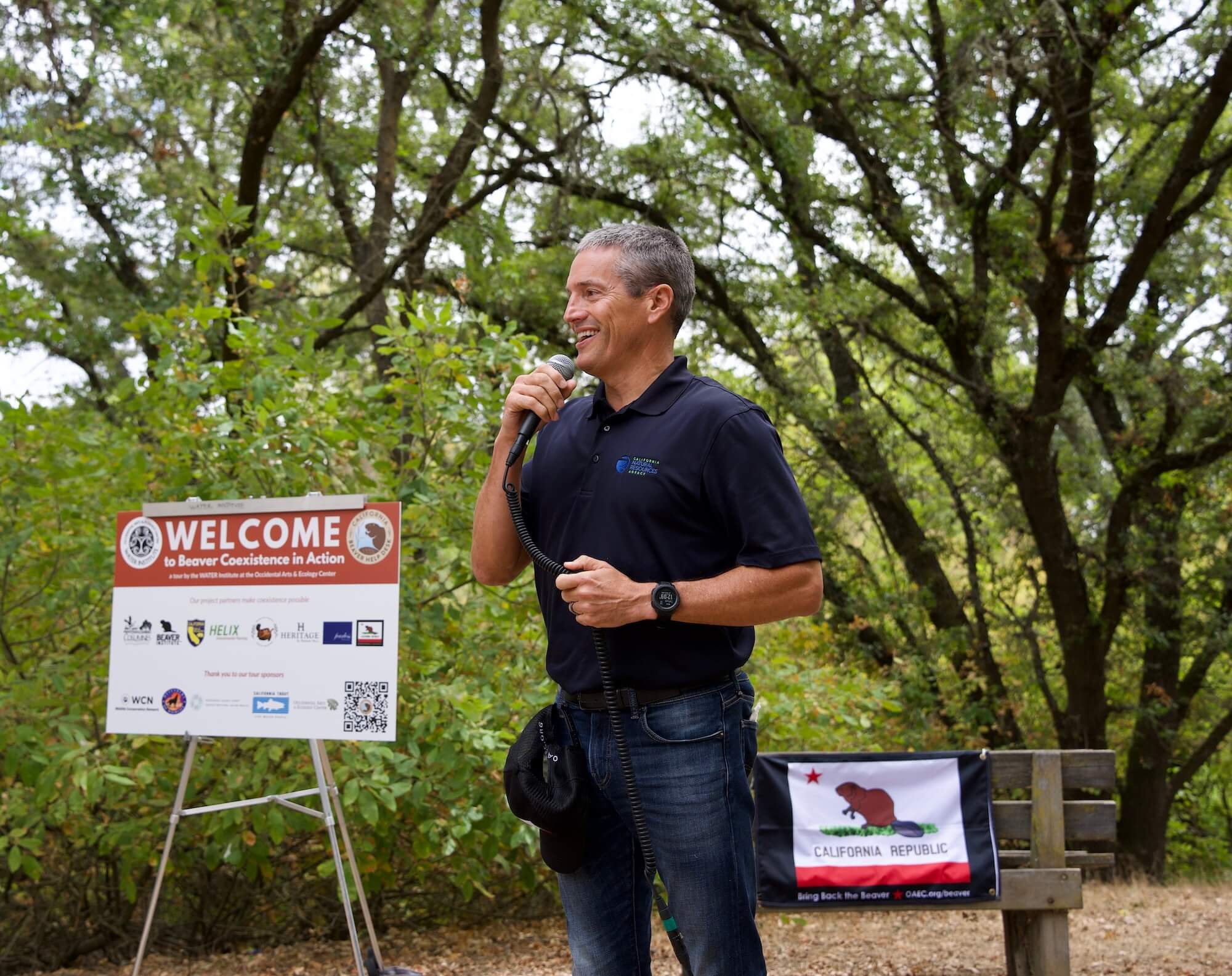
Wade Crowfoot, California Natural Resources Agency Secretary, speaks about beaver as important nature-based solutions for California.
Photo Credit: Brock Dolman/OAEC.
As featured guest speaker, Wade Crowfoot, California Natural Resources Agency Secretary, put it: “In California, we have great technology to address big environmental challenges, but we’ve had a blind spot around restoring natural processes as a way to address these challenges. Beavers are the ultimate mascot for these nature-based solutions. They work for free 24 hours a day—they know nothing but to do the work. If we can restore them to the ecosystem as a keystone species that’s shaping the habitat, we’re going to do incredible things for wildfire and water supply benefits.”
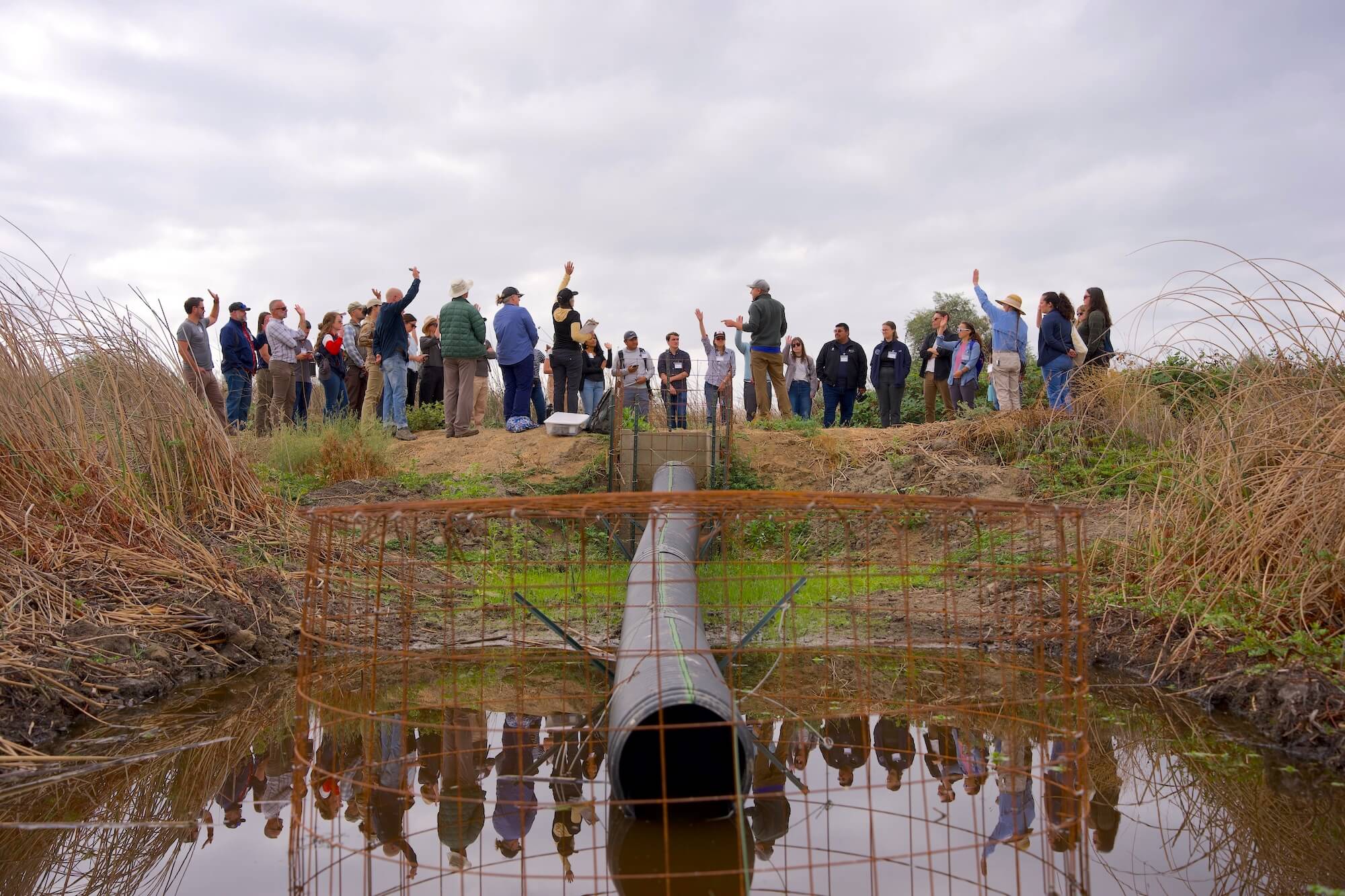
To remedy beaver conflict at Cosumnes River Preserve, the California Beaver Coexistence Training and Support Program partnered with the Beaver Institute and Connected Ecology to lead beaver coexistence trainees in the installation of two types of deterrence structures: a Beaver Back Saver and a Fence and Pipe Flow Device, as seen above. Clint Helm, the Preserve’s Wildlife Biologist, shares the benefits of using beaver coexistence devices in managed wetlands.
Photo Credit: Brock Dolman/OAEC.
The tour kicked off at the Cosumnes River Preserve (CRP), in the Sacramento-San Joaquin River Delta, a site co-owned and managed by 10 entities, including the Bureau of Land Management and Ducks Unlimited.
The group toured the Preserve’s managed wetlands to see how coexistence installations prevent beaver from clogging up the works. With brief presentations from Clint Helms (Preserve Wildlife Biologist, Bureau of Land Management) and Cathy Mueller (Certified Beaver Coexistence Professional, Connected Ecology), tour attendees gained firsthand knowledge about how these simple, cost-effective structures allow water to move freely through the water conveyance structures, culverts, and drains that are critical for regulating changing daily and seasonal water levels at the Preserve.
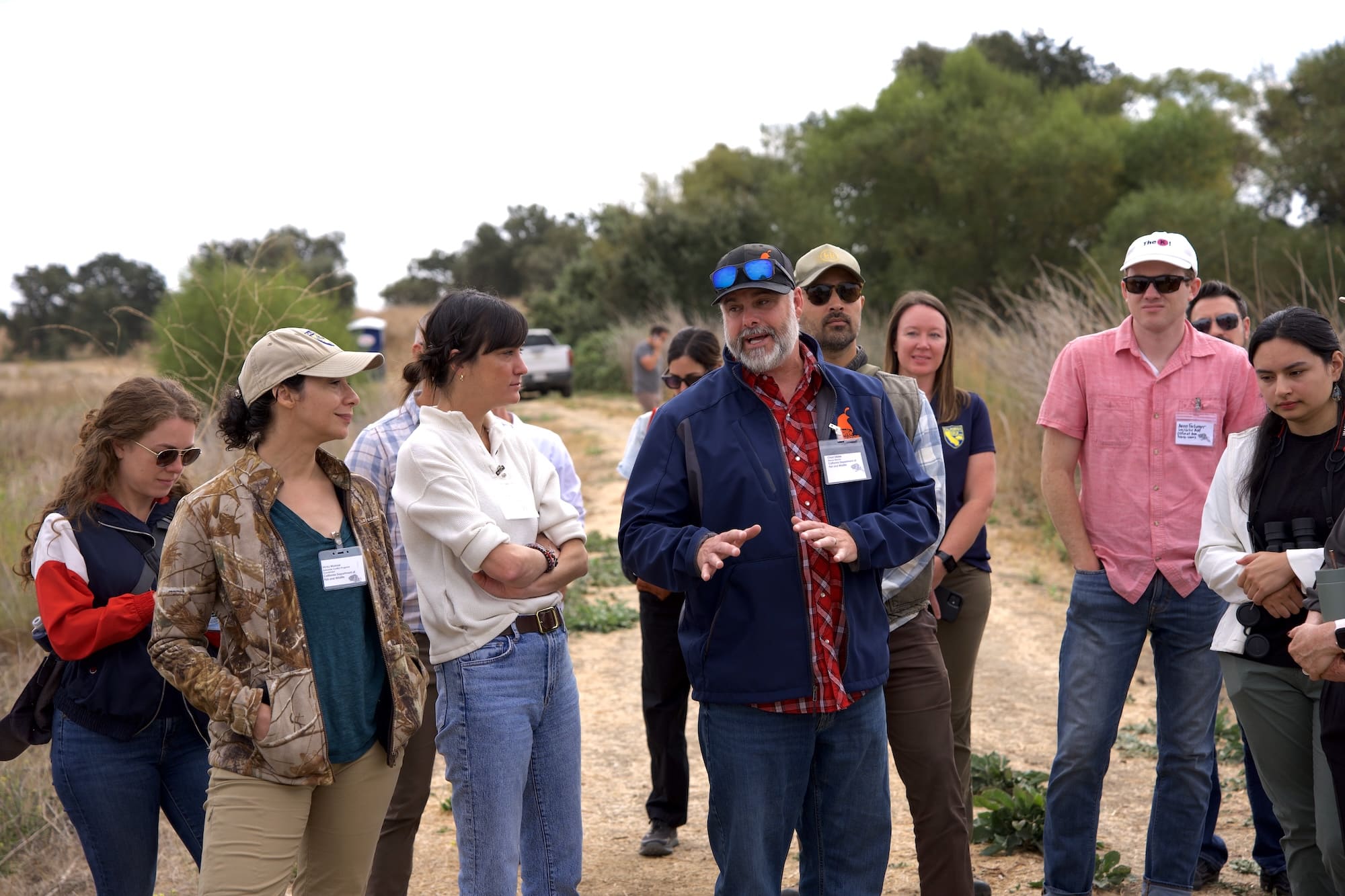
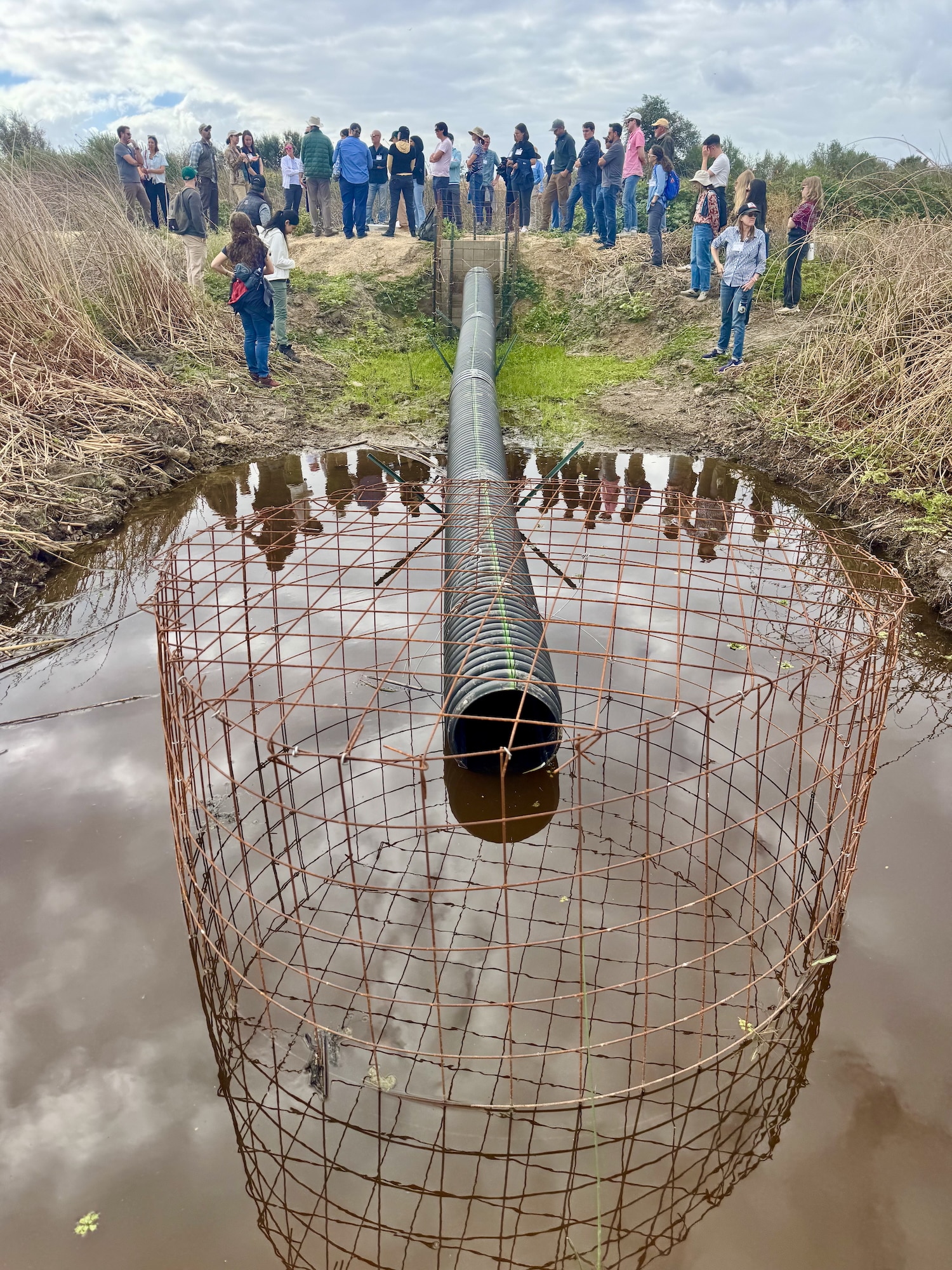
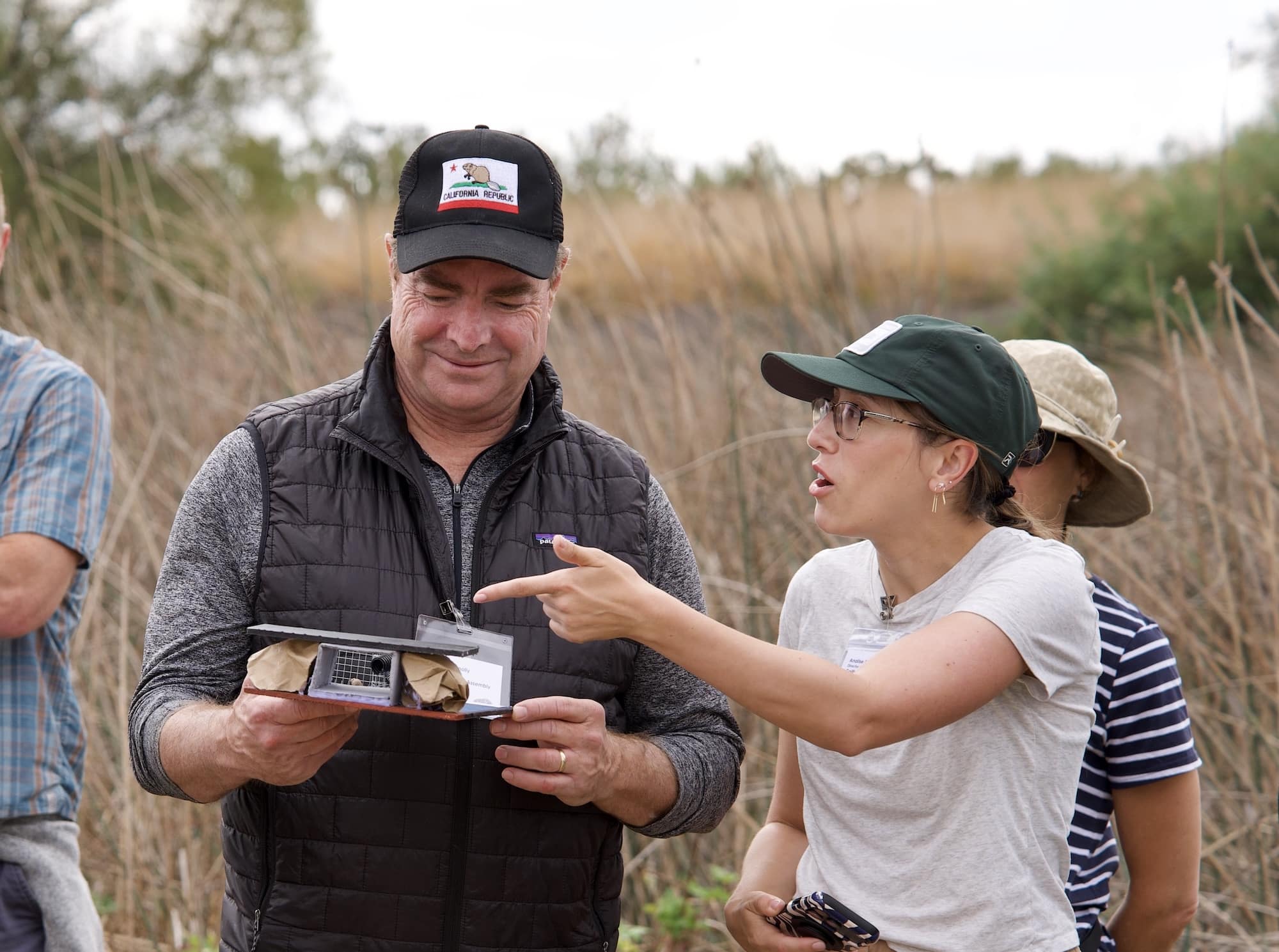
(left) Chad Dibble, Deputy Director at California Department of Fish and Wildlife, talks about beaver restoration and coexistence; (middle) tour attendees learn about a Fence and Pipe Flow Device; (right) Assemblymember Damon Connolly and California Trout Policy Director, Analise Rivero, learn about coexistence from an educational coexistence device model. Photo Credits: Brock Dolman/OAEC.
Clint shared how the highly efficient Beaver Back Saver and Fence and Pipe Flow Device installed last fall have significantly reduced his team’s workload—a huge win for this strained public agency. He also shared that, thanks to the efficiency of the newly installed devices, the CRP team requested two additional Beaver Back Savers and a Fence and Pipe Flow Device, each adding continued resilience to the system.
As the tour continued, some attendees wondered what ecosystem benefits beaver can actually offer in such a managed system. Here, their presence can create diverse plant communities and unique habitat improvements. By eating tule reed and cattails, beaver open up space for other plants to take root. They also plant willows and prompt germination as they burrow through buried seed banks. Plus, when beaver create tunnels through wetland foliage, they forge trail networks that continue to diversify the habitat, offering passageways and shelter for fish, frogs, invertebrates, and waterfowl. Later in the season, when these wetlands are drained, dryland animals can benefit from the tunnels too.
After touring the Preserve, the group moved to a luncheon to hear brief talks from prominent state leaders, who offered context on the conservation value of beaver and coexistence as a forward-thinking strategy.
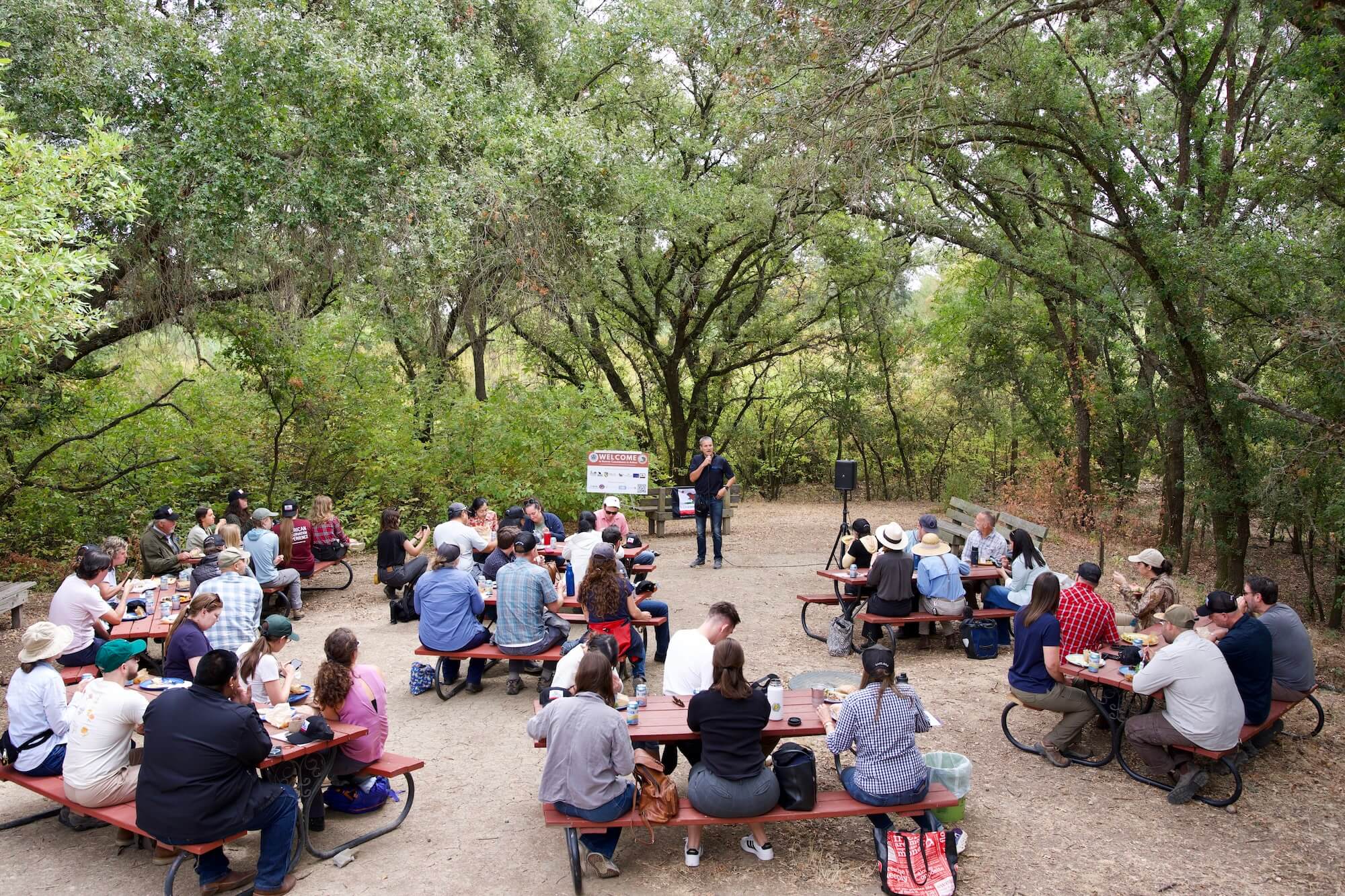
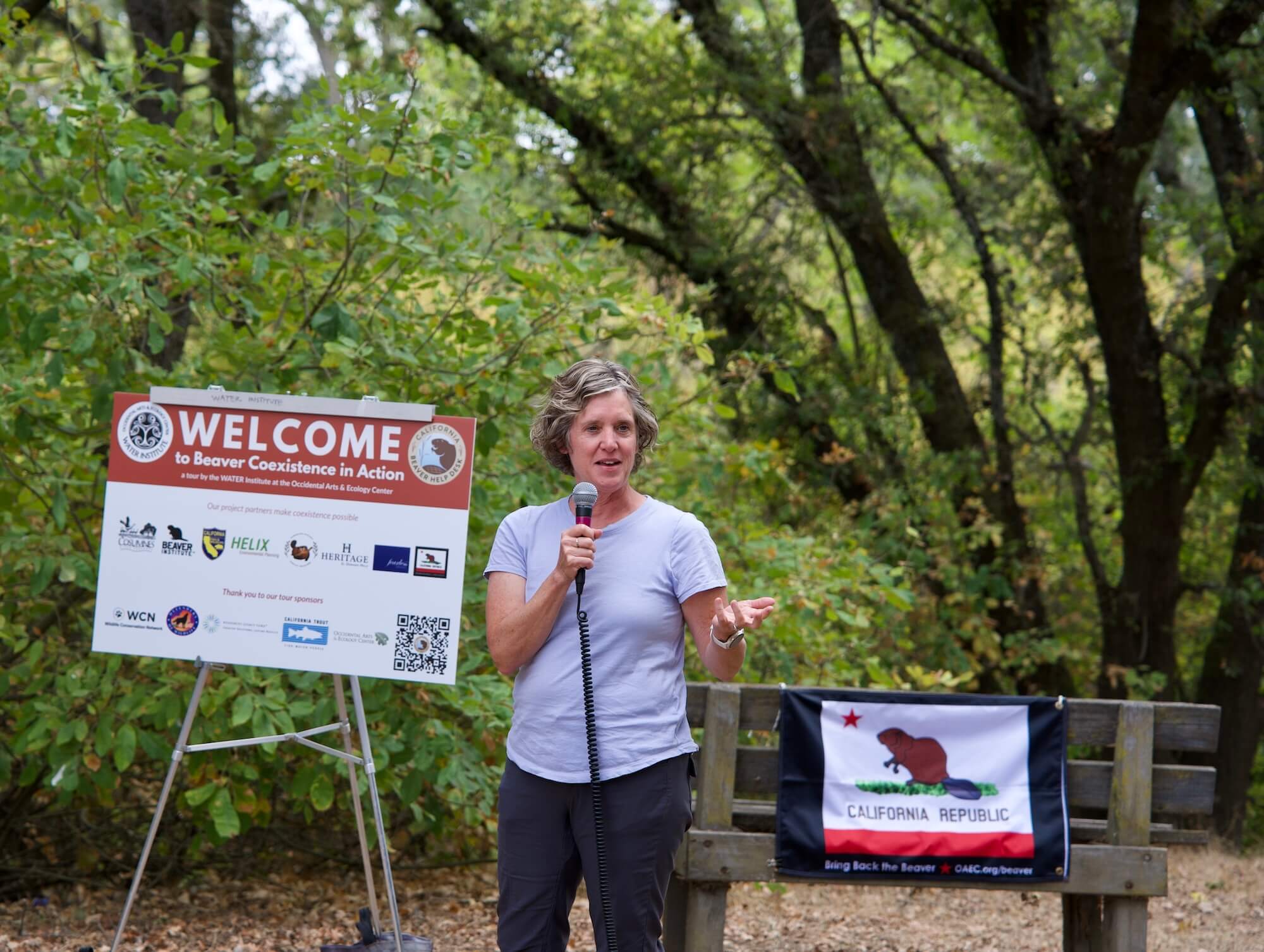
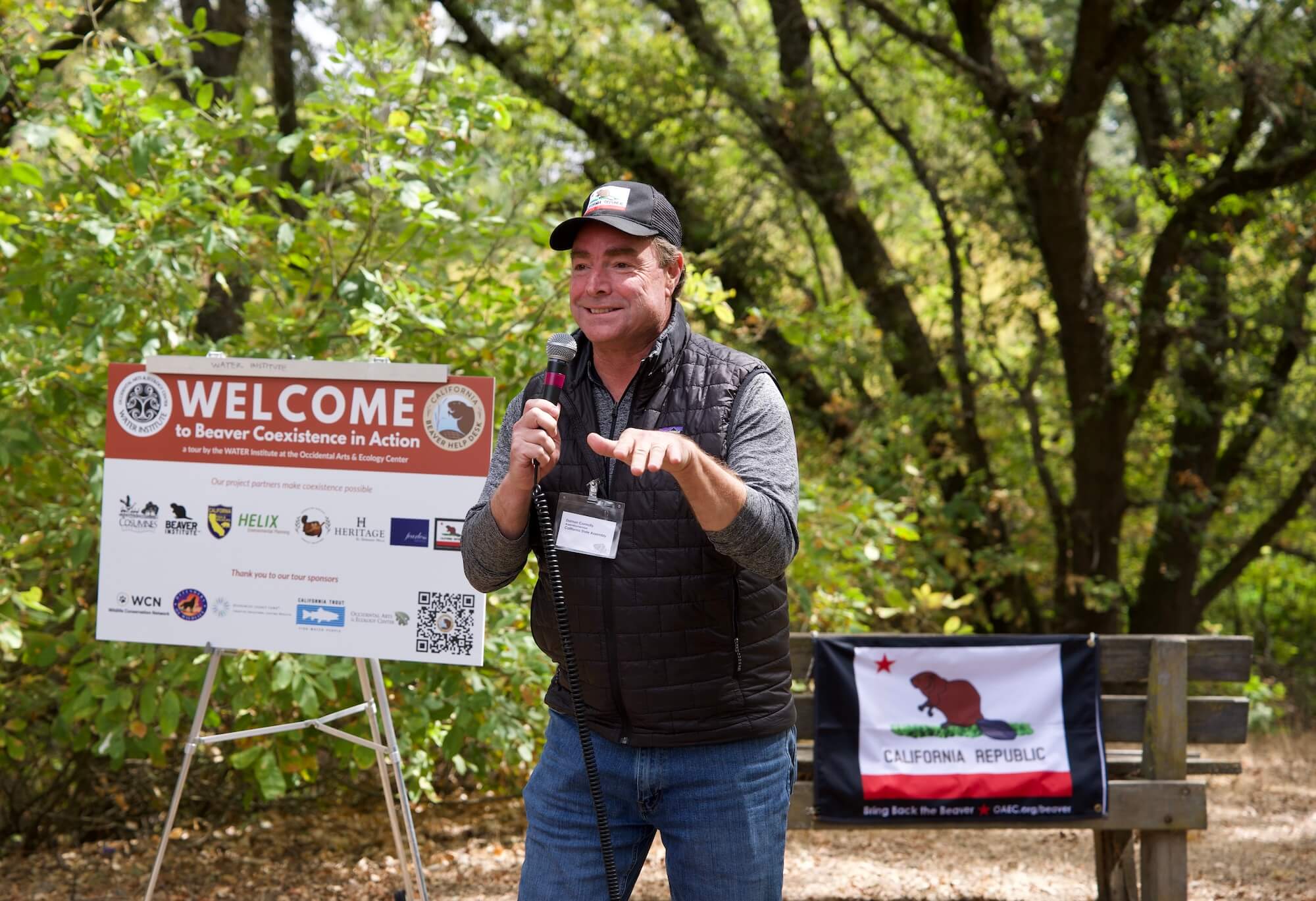
Featured speakers present at lunch: (top) Wade Crowfoot, California Natural Resources Secretary; (bottom left) Jennifer Norris, Executive Director of the Wildlife Conservation Board; (middle) Asm. Damon Connolly, Wade Crowfoot, and Kate Lundquist, Brock Dolman, and Grey Hayes from the WATER Institute team; (bottom right) Assemblymember Damon Connolly. Image Credits: (1, 2, 4) Brock Dolman/OAEC & (3) Jennifer Fearing/Fearless Advocacy
Lunchtime speakers included: Damon Connolly, California State Assemblymember; Wade Crowfoot, California Natural Resources Secretary; Jennifer Norris, Executive Director of the Wildlife Conservation Board; Jennifer Fearing of Fearless Advocacy; and Kate Lundquist and Grey Hayes, WATER Institute leaders.
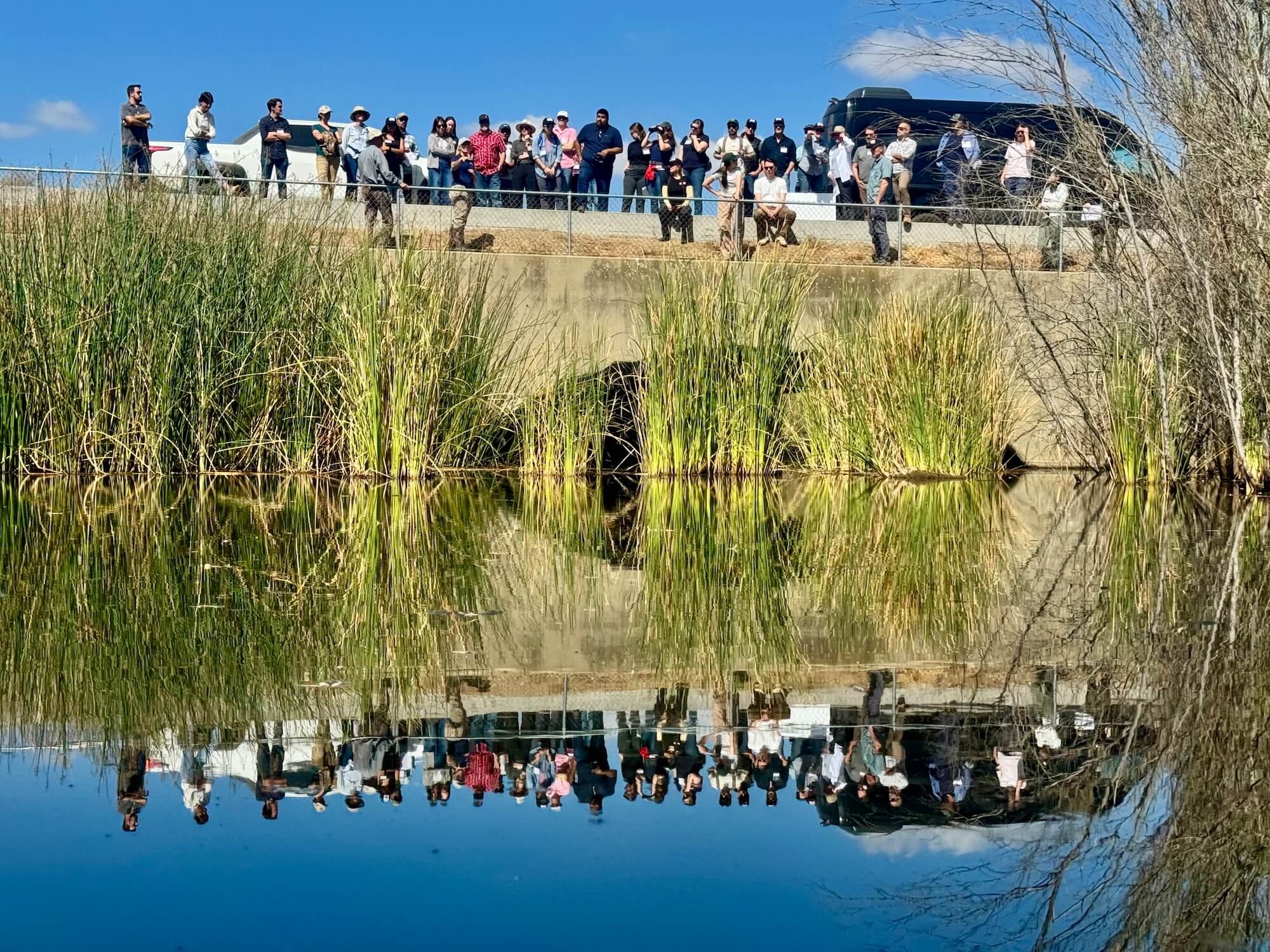
The tour continues in a suburban El Dorado Hills neighborhood located at the Wildland-Urban Interface of the Sierra foothills. Image Credit: Brock Dolman/OAEC
For the group’s second tour stop, they headed off to a suburban El Dorado Hills neighborhood in the Sierra foothills. There, Claire Watkins of Helix Environmental Planning shared how she brought coexistence to the Heritage Homeowners Association after neighbors contacted the California Beaver Help Desk with concerns about potential flooding on Carson Creek.
As Secretary Crowfoot referenced in his lunchtime talk, attendees on this stop got to see firsthand the nature-based solutions beaver provide in a populous suburban neighborhood at the Wildland-Urban Interface. Their ecosystem engineering mitigates wildfire impacts by creating fire-resistant riparian zones that can slow active fires. As well, their wetland complexes recharge groundwater and filter excess sediment and other contaminants, removing fertilizers and heavy metals and improving water quality for people, fish, and other animals in the neighborhood.
To harness these benefits while minimizing unwanted flooding, this site now features two Flexible Pond Levelers, which encourage beaver to stop building their dams and will keep water levels stabilized at base flow.
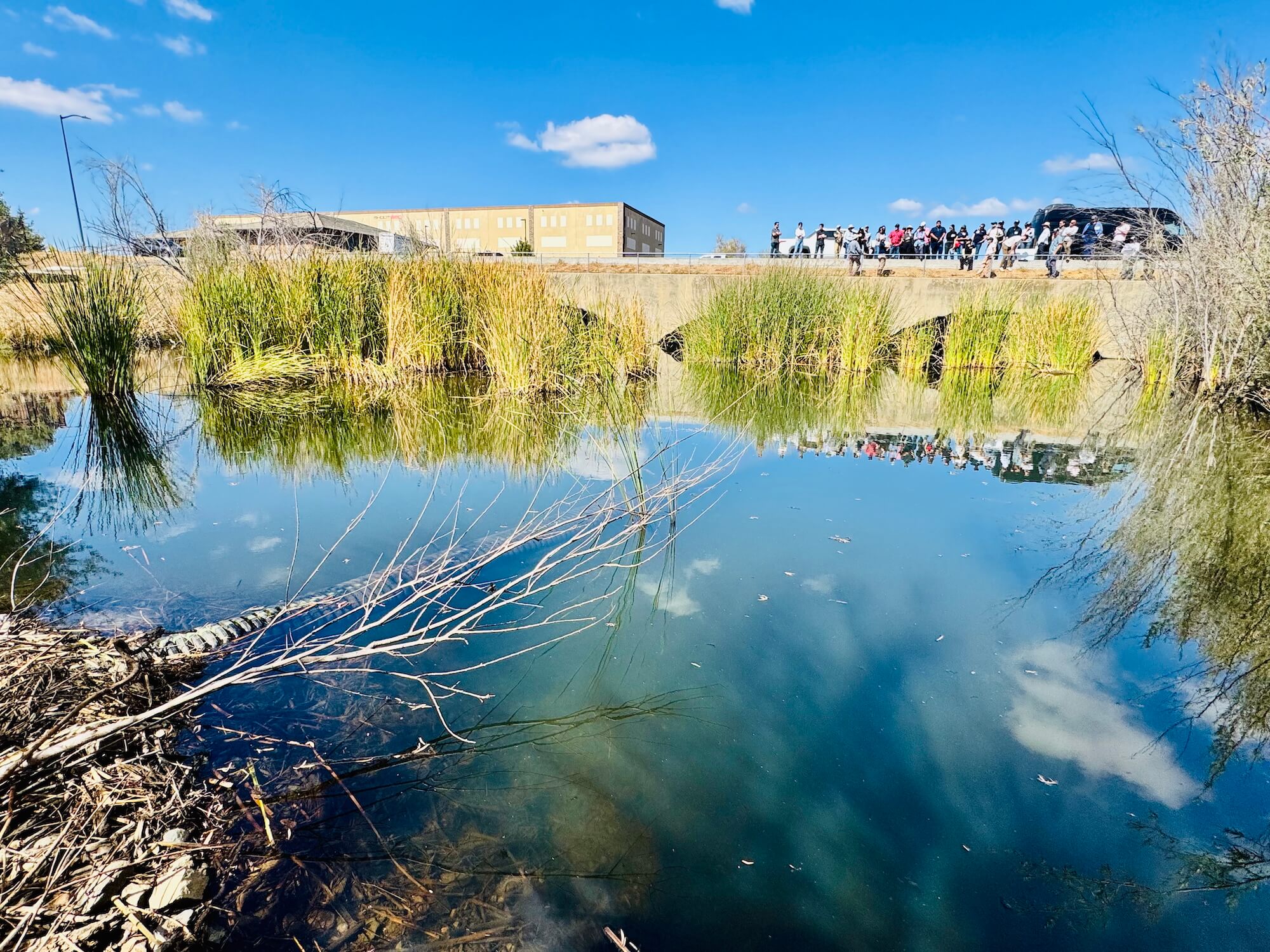
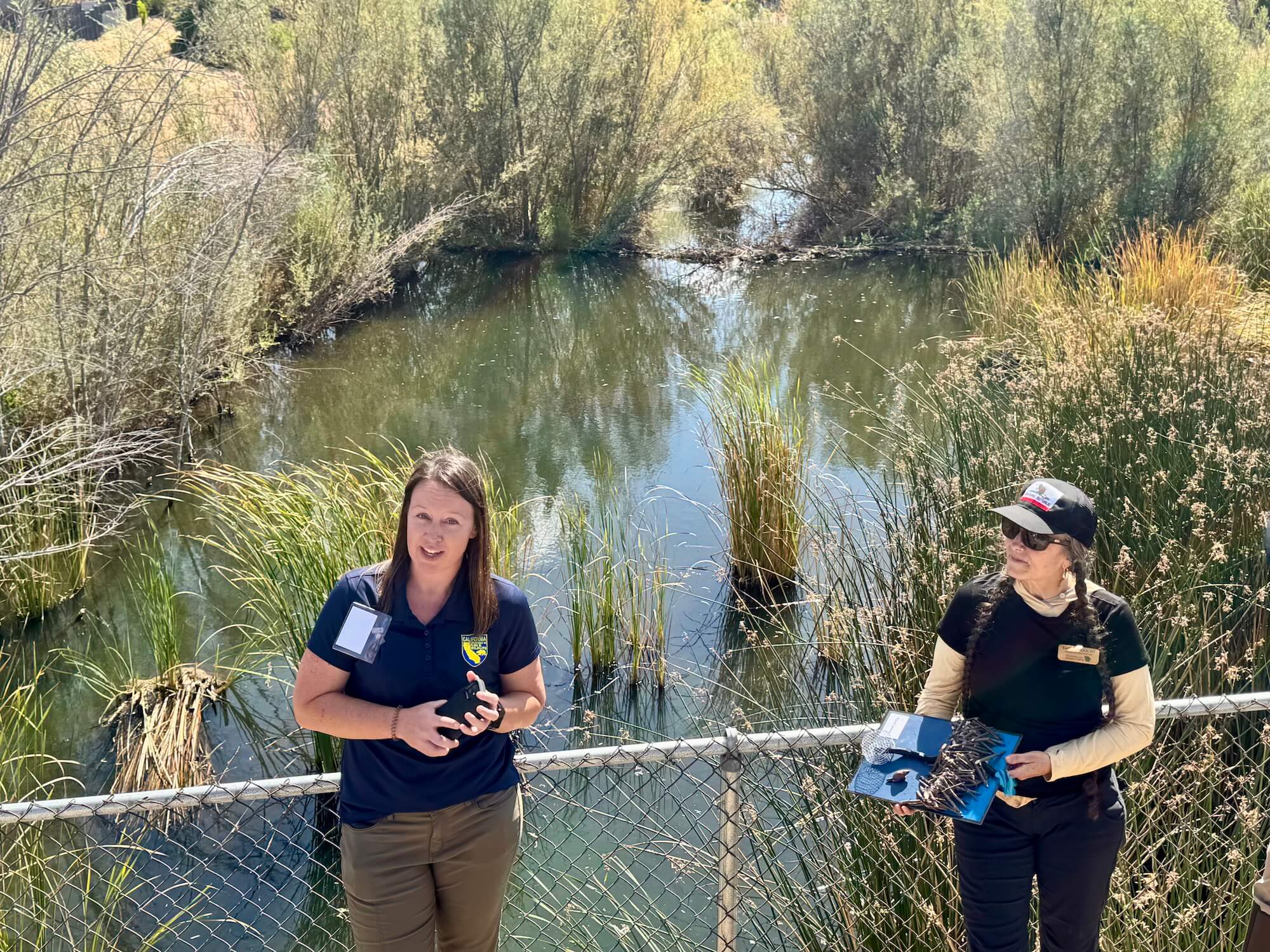
(left) Participants oversee the Flexible Pond Leveler in Carson Creek in an El Dorado Hills neighborhood. (right) Valerie Cook, Beaver Restoration Program Manager at CDFW, shares information about beaver restoration and coexistence in California. Image Credit: Brock Dolman/OAEC
During this tour stop we also had the opportunity to hear from Valerie Cook from the California Department of Fish and Wildlife’s Beaver Restoration Program team. She shared valuable and timely perspectives about the successes and challenges of beaver coexistence and restoration initiatives throughout the state.
We are grateful for the cross-pollination and new partnerships that emerged during this tour. We look forward to further cultivating relationships with key policymakers, agency staff, and our own co-managed California Beaver Policy Working Group as we continue building viable pathways for beaver coexistence in California.
If you or your community would like additional resources on beaver coexistence, or would like to create coexistence partnerships for your region, please connect with our team.
Many thanks to our project partners: Cosumnes River Preserve, Connected Ecology, Helix Environmental Planning, Heritage El Dorado Hills, The Beaver Institute and BeaverCorps Program, California Department of Fish and Wildlife, and Fearless Advocacy.
Deep appreciation to our tour sponsors: Wildlife Conservation Network, California Trout, Resources Legacy Fund, and Defenders of Wildlife.


