~ By Rachel Hellman, 2026 OAEC Garden Intern
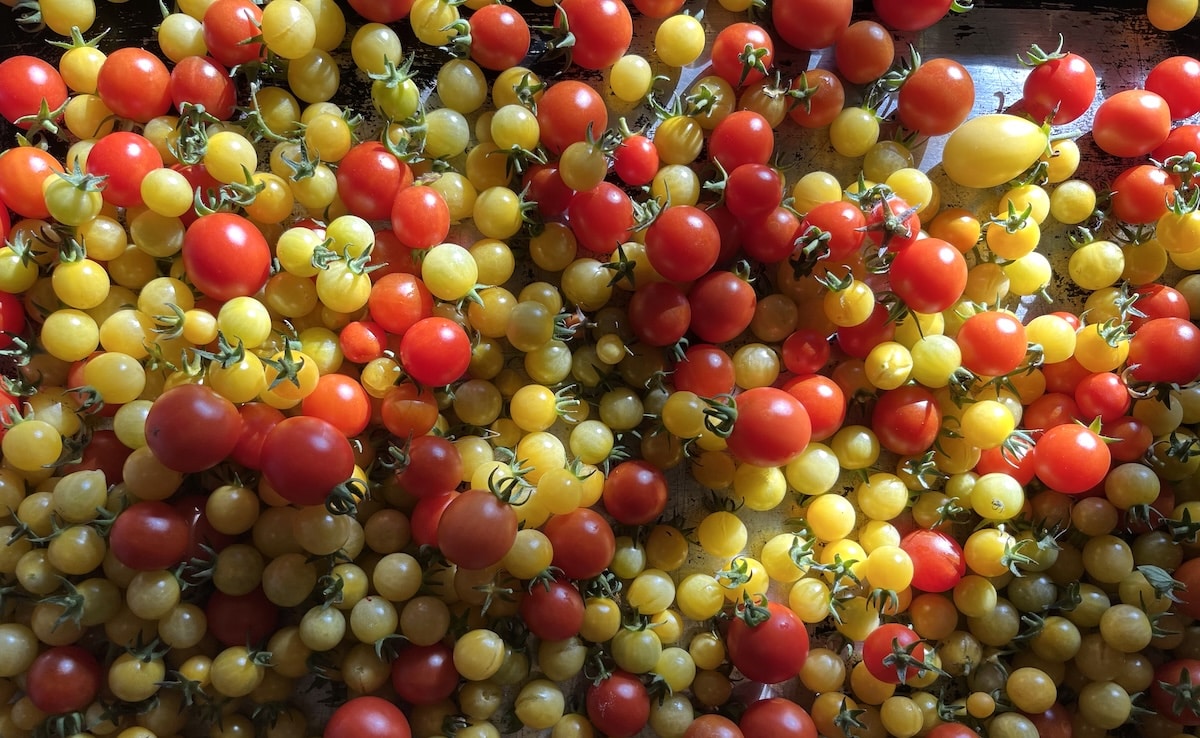
Here at the Occidental Arts and Ecology Center, we’re reveling in the abundance of fall. The grounds are teeming with produce, and our garden crew is busy with the slightly frenzied but always joyous work of harvesting it all.
But even as we cure hundreds of pounds of winter squash in our greenhouse and savor dozens of tomato varieties at each meal, the familiar winter shortage of fresh leafy greens looms on the horizon.
Extend Your Harvest with Perennial Greens
Enter perennial greens, like Buckwheat, Tree Collards, and Sorrel, which can help bridge the winter “hunger gap.” And right now, just before the rainy season begins, is an ideal window for planting these perennial food crops. Nursery and Landscape Manager Nicolas Whitaker has stocked the OAEC with a wide array of perennial crops and native plants, ready to take root over the winter.
“Perennials can really establish their root systems in the rainy months so that they can hit the ground running before summer arrives,” Nicolas said. Once established, many perennial greens can also tolerate drought, thriving through the dry summer months with minimal irrigation.
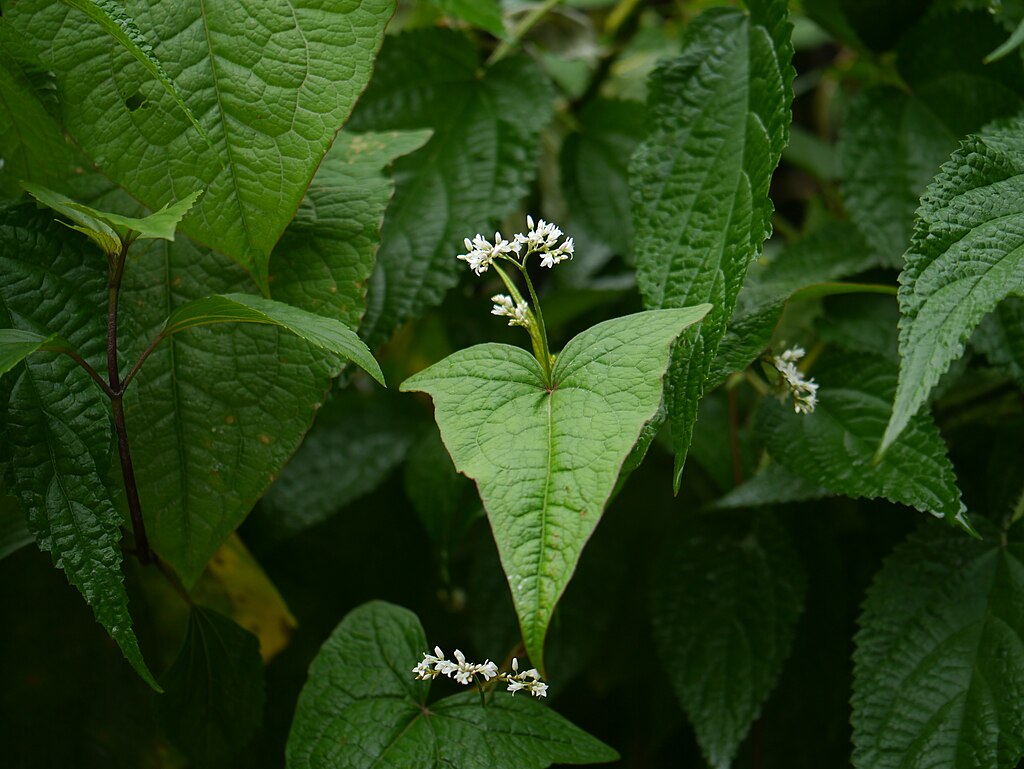
A favorite “hunger gap” crop in the OAEC garden is Perennial Buckwheat (Fagopyrum dibotrys, pictured above). Unlike the familiar annual crop harvested for its grain-like seeds, this fast-growing variety is prized for its abundant leafy greens and grows in a cloud-like bush in the southern section of the OAEC Mother Garden.
Its heart-shaped leaves offer a slightly tangy flavor that mellows beautifully when sautéed with garlic or tossed into a fresh salad. Though a heavy frost will kill the foliage down to the ground for the winter, this resilient plant bounces back to offer abundant harvests in both late fall and early spring shoulder seasons.
“It’s a super low-maintenance, high-yield plant,” said Miles Horobin, Garden Manager at OAEC. “Unlike spinach, which is similar to perennial buckwheat when sautéed, you can pretty much just plant it and forget about it.”
As California’s climate grows hotter and more unpredictable, choosing plants that can thrive under future conditions is an increasingly important part of building a resilient garden. At OAEC’s spring Food Forest Course, participants explored how to select plants suited not just to their garden’s current hardiness zone, but to the growing conditions they’re likely to face in the years ahead.
Case in point: our perennial buckwheat patch didn’t die back at all this winter because temperatures never dropped low enough.
Build Climate Resilience with Native Plants
Native plants, which are adapted to the changing climate of the region, are an important tool for growing “future-proofed” landscapes. That’s why the OAEC Nursery carries a wide selection of native plant species.
Some favorites include: “Sonoma Coast” Yarrow, Elk Clover, Wild Ginger, Pink Flowering Currant, and California Bee Plant, which is a preferred plant of Luke Reppe, OAEC Landscape and Nursery Assistant. This native blooms with small reddish flowers in the summer and fall.
Luke associates bee plant with tenacity. When his home garden was destroyed by gophers a few years ago, bee plant was the singular surviving plant.
“It’s such an unassuming pollinator,” he said. “But it has such a way of surviving, and it flowers for a really long time.”
Another native plant that Luke is especially fond of is California Mugwort (Artemisia douglasiana), which is available at the nursery. Found in virtually every county in the state, this perennial has a long history of use among Indigenous communities, including as a traditional medicinal plant. Its cultural significance and uses vary among communities, reflecting generations of place-based knowledge.
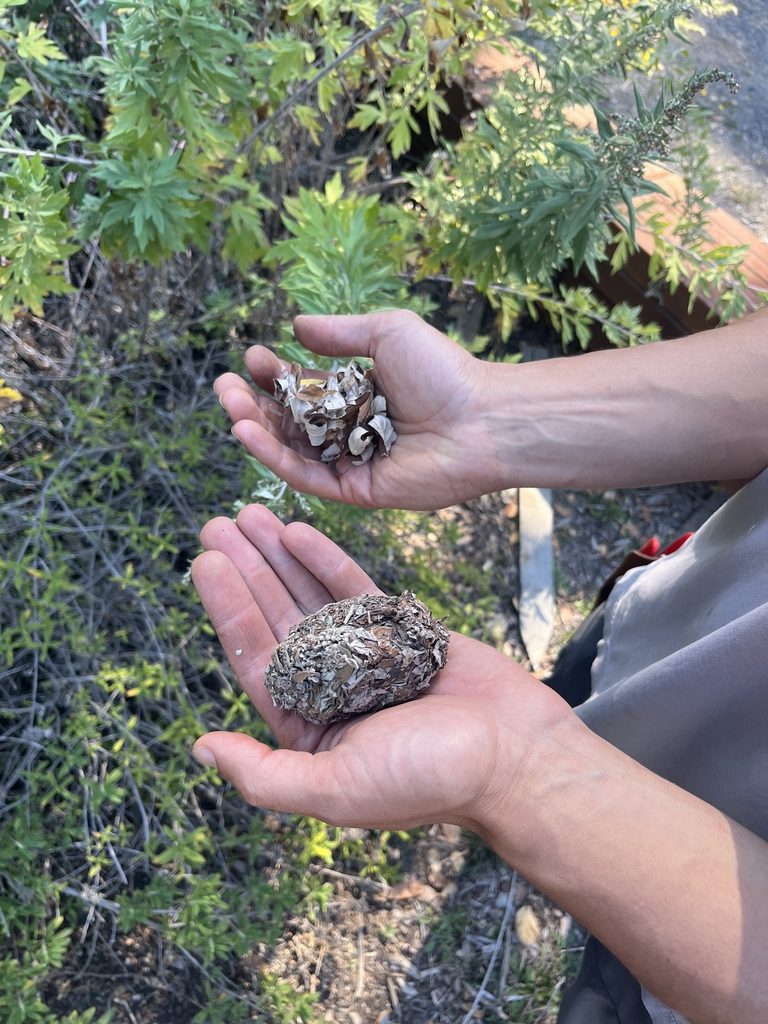
On a recent October afternoon, Luke harvested California Mugwort from a patch outside the nursery to craft a simple herb bundle (pictured right). He held the stalk steady with one hand while loosening the dry leaves with the other, a technique he had learned at Heron Shadow, an Indigenous land project in Sebastopol.
After pulling the herb into a bundle and compacting it by hand, he placed it on his car dashboard — his favorite spot to let the herb finish curing. Once dry, the versatile bundle can be used as loose incense, a smoking blend, or as an aromatic dream pillow. California Mugwort and other native plants are available at the OAEC Nursery.
Plant your Cold-Season Medicinal Patch
Fall is also an ideal time to plant a backyard medicinal herb garden. As flu season approaches, consider planting perennial herbs like Yarrow, Comfrey, Marshmallow, and Echinacea, which can be used to strengthen the immune system or soothe a sore throat.
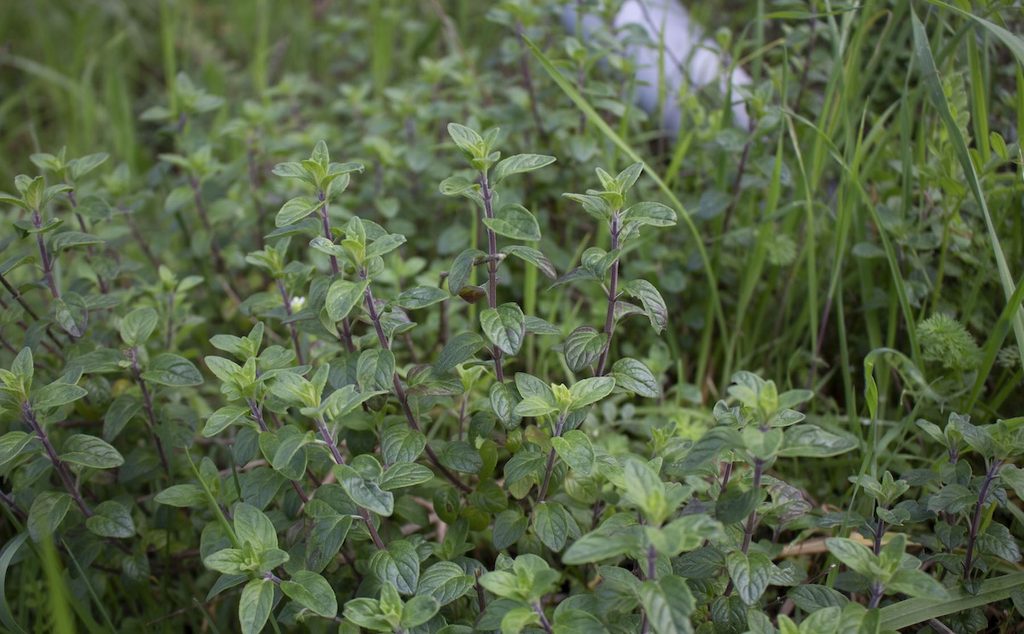
Coyote Mint (Monardella villosa, pictured above), a drought-tolerant native plant, is a favorite medicinal of Miles, who likes to steep the intensely fragrant fresh leaves for a warming tea in the winter months. “It’s the best cup of fresh mint tea around,” Miles said. “Plus, mint is great for your digestion.”
Looking for medicinal plants suited to your own garden? Visit the OAEC Nursery to explore our selection of perennial food crops and native plants and talk with our team about what will thrive in your growing conditions.
While fall is a season of abundance, it’s also a great time to plant for the cold months to come. Planting perennial greens, native plants, and medicinal herbs now helps lay the groundwork for a garden that’s abundant in late winter and spring, just when vibrancy is needed the most.
If you’re wondering which plants are best suited for your specific garden conditions, stop by the OAEC Nursery to explore our selection of fall perennials and chat with our team.


