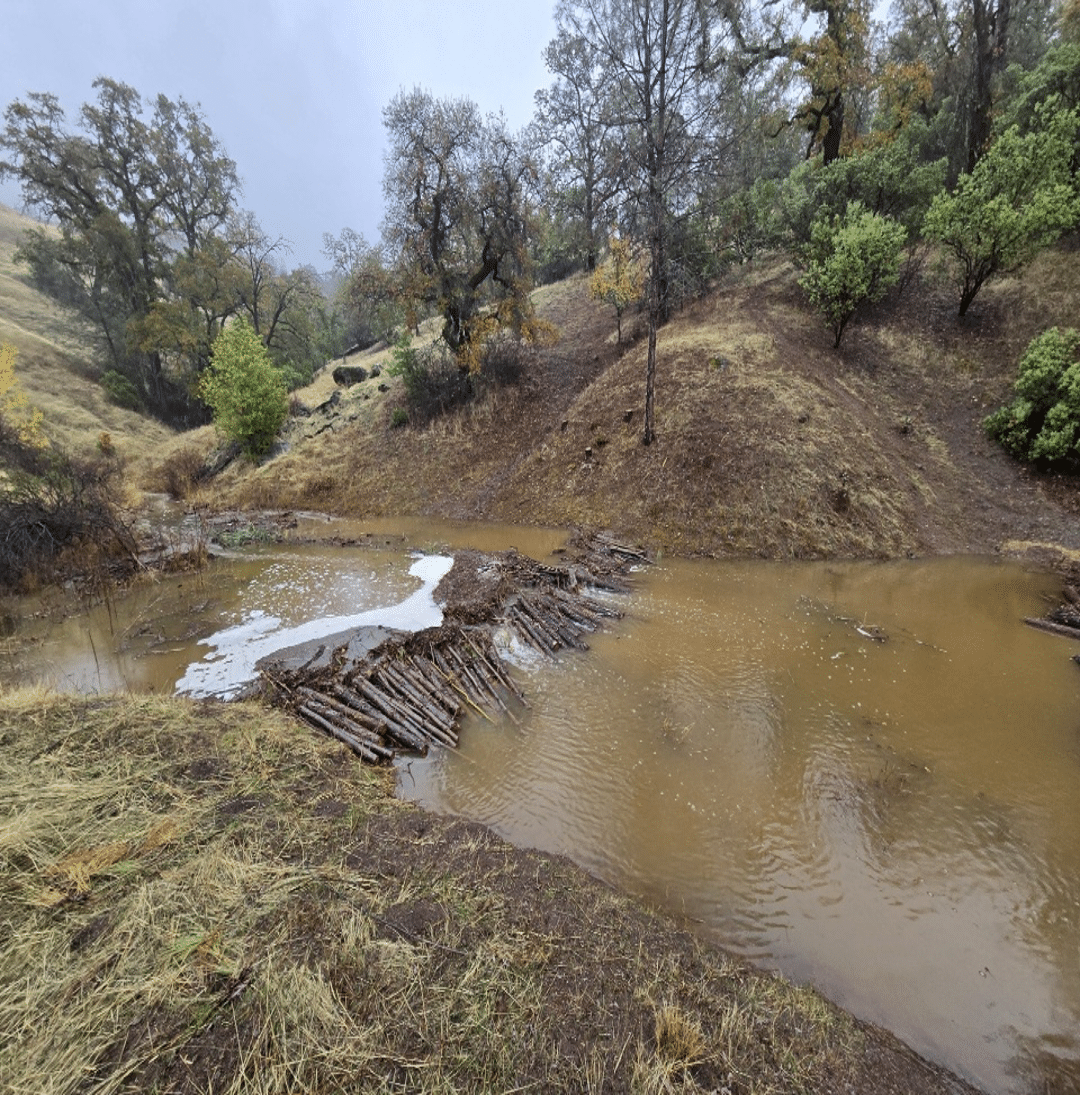
Restoration site during a rain event after the first year’s implementation. The structures are helping infiltrate water and trap ash and sediment in a waterway that only sees occasional flow in the rainy season. Photo: Russell Gordon Jr. / Robinson Rancheria of Pomo Indians
This fall, WATER Institute Co-Directors Brock and Kate reunited with our partners at Robinson Rancheria of Pomo Indians and Tribal EcoRestoration Alliance (TERA) to lead a second annual training featuring various low-tech process-based restoration (PBR) methods straight from our Fuels to Flows toolkit. During this day-long training, participants continued stewardship of an important watershed while creating long-term fire resilience on Robinson Rancheria land.
Luis Santana, Fish and Wildlife Director of Robinson Rancheria, originally chose an important intermittent stream and pond to mitigate potential sediment, ash, and fire-retardant runoff from the uplands, which burned in the 2024 Acorn Fire. Now in its second year, this post-fire restoration project continues to trap sediment, improve habitat health, increase water storage, and ensure greater fire resilience through the installation of responsive PBR structures. Each of the outcomes these structures provide supports the Tribe’s goal of rearing endangered and culturally important Clear Lake hitch (fish) downstream.
As the workshop began, participants noticed that last year’s structures successfully filled up with sediment during high winter flows, so the team got to work augmenting each one. This will enable additional sediment accumulation in the coming seasons. By the end of the day, the team also built a new structure at the top of the system, two postless beaver dam analogs, and several brush dams. There are now four structures creating water-holding resilience in this important watershed.
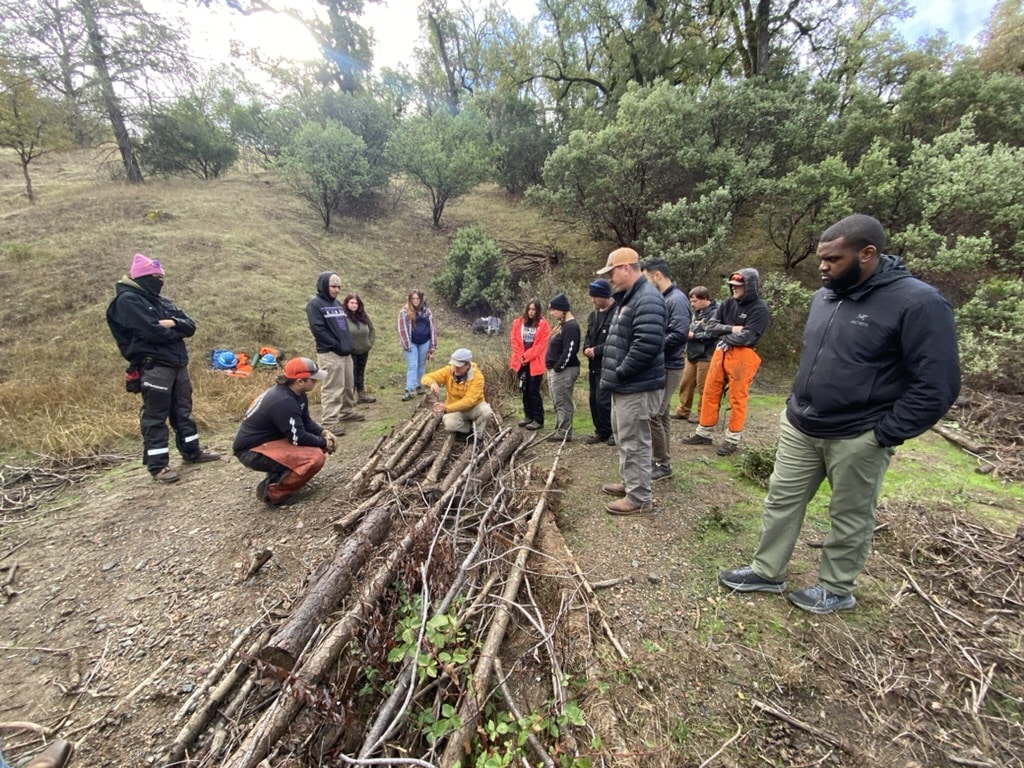
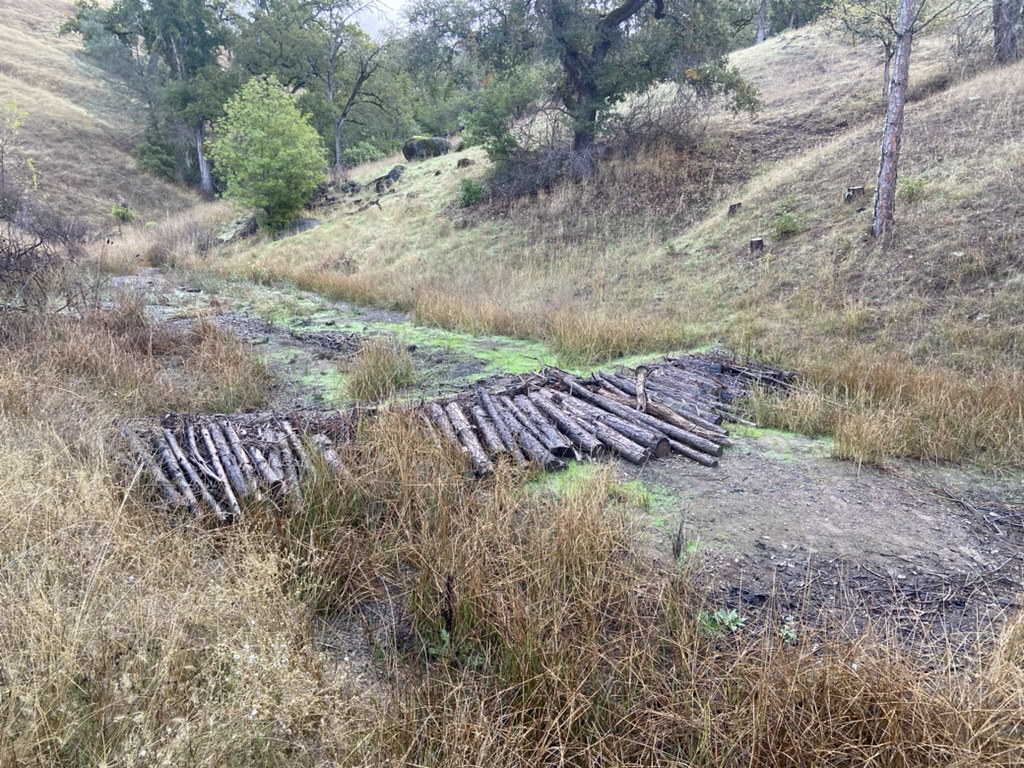
(Left) WATER Institute Co-Director, Brock Dolman, demonstrates PBR techniques from the Fuels to Flows toolkit. (Right) The restoration site without flows, due to lack of rain in the system. Photo: Kate Lundquist/OAEC
With the final heaps of soil shoveled and the last branches packed into place, participants added important layers of immunity and resilience to this watershed. It was inspiring to see the group exchange a shared ethos of stewardship, informed by traditional ecological knowledge and Fuels to Flows PBR methods. As our partners at Robinson Rancheria steward their lands, the WATER Institute is honored to collaborate in this ongoing conversation with the ecosystem.
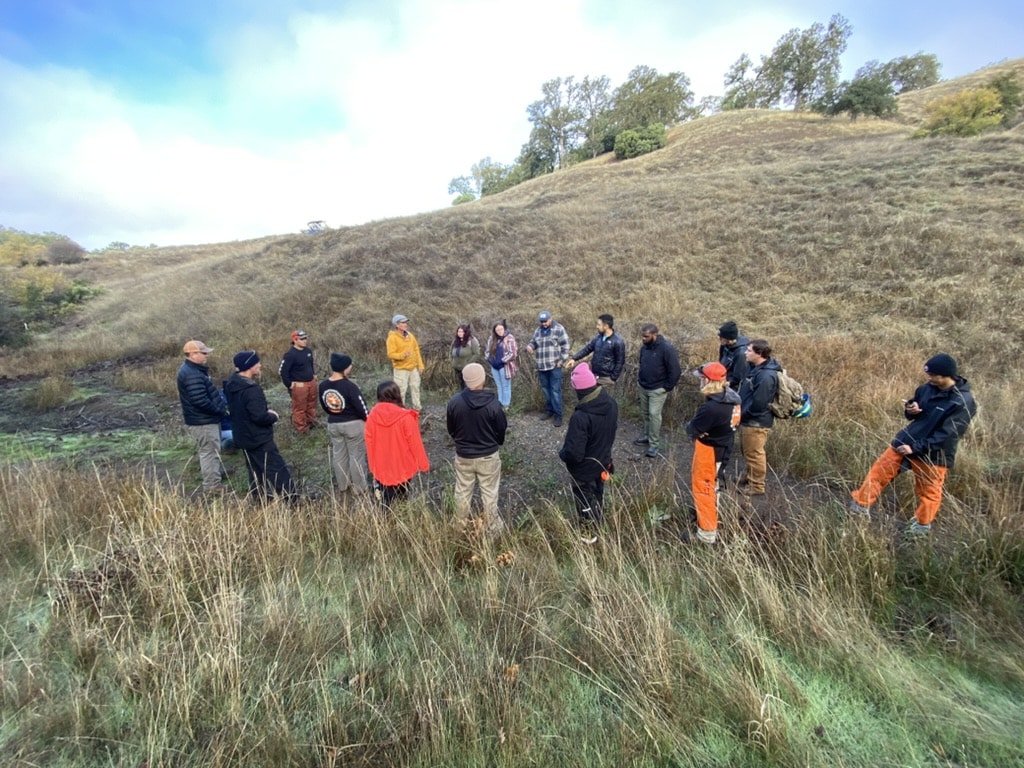
The group gathered to be in responsive communication with the land by using process-based restoration at Robinson Rancheria. Photo: Kate Lundquist/OAEC
Many thanks to Luis, Christina Lara, and everyone from the Robinson Rancheria and TERA who made this training exceptional (including Luis’s home-made tacos). This collaborative work to build capacity for Tribal-led stewardship at the landscape scale is truly inspiring.


