~ By Lynn Hoffman, OAEC’s Fiscal Sponsor Program Director and a life-long resident of Minneapolis
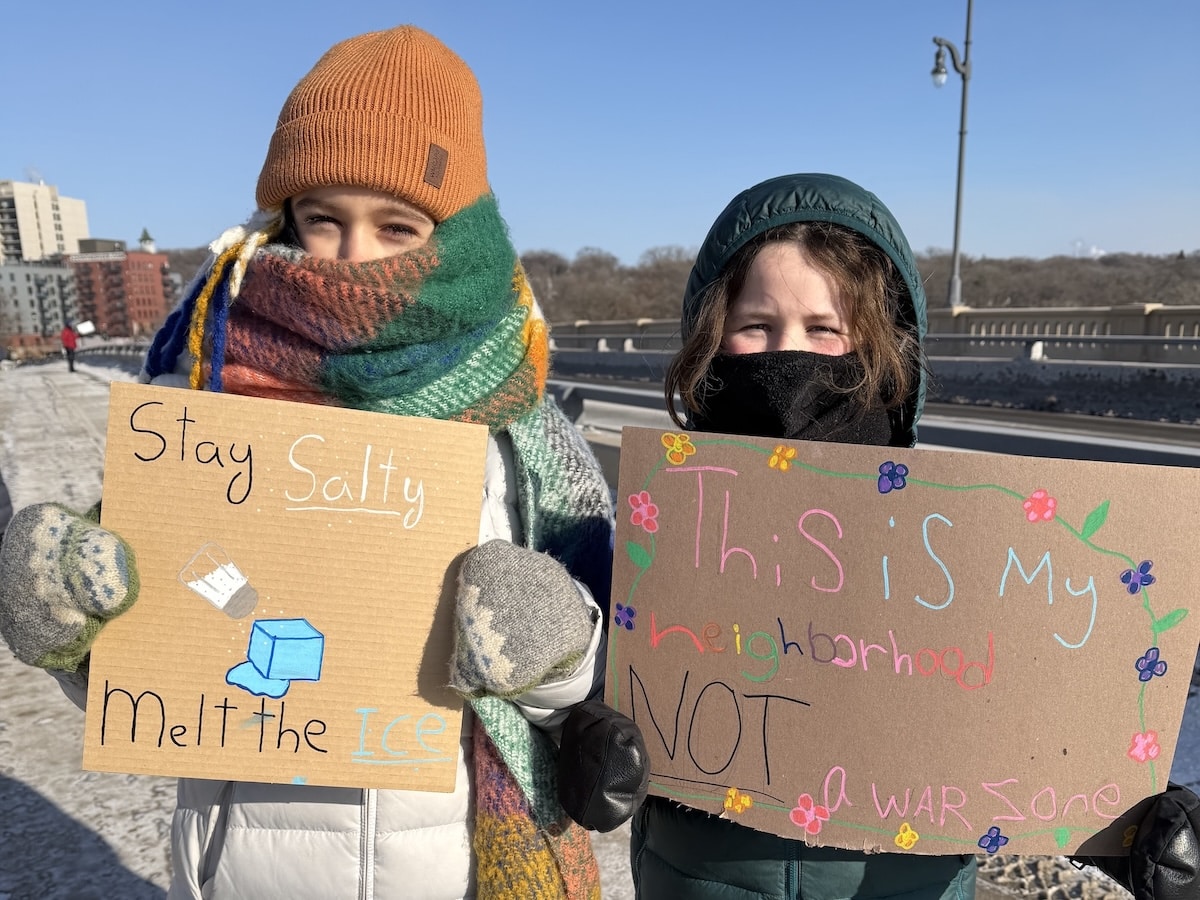
The whole world watched as Minnesotans stood up to the extreme violence, racism, and terror inflicted on our communities by federal immigration agents this winter. I’m a life-long resident of Minneapolis, but work for OAEC (remotely) as Fiscal Sponsorship Program Director, and as spring slowly arrives and we shift now from intense crisis mode to responding to quieter ICE tactics and rallying rent relief, it feels important to reflect on elements of the incredible collective response to the ICE occupation that can be carried forward to build more resilient communities everywhere.
Working with what (and who) we’ve got
The internet and social media allow us to find like-minded people with shared interests and opinions from all corners of the world with whom we can create virtual, consonant communities. What we lose in finding all of “our people” virtually is practicing being in community with neighbors who have slightly (or wildly) different lived experience, interests, and points of view.
My family is pretty community-oriented and civically engaged. Even so, in committing ourselves to action against the ICE invasion of our city, we found ourselves pushing past layers of discomfort not just in personal risk and fear, but also hanging in there with people we don’t spend much time with. One takeaway for us is that our “neighboring” muscles can atrophy if we don’t exercise them often.
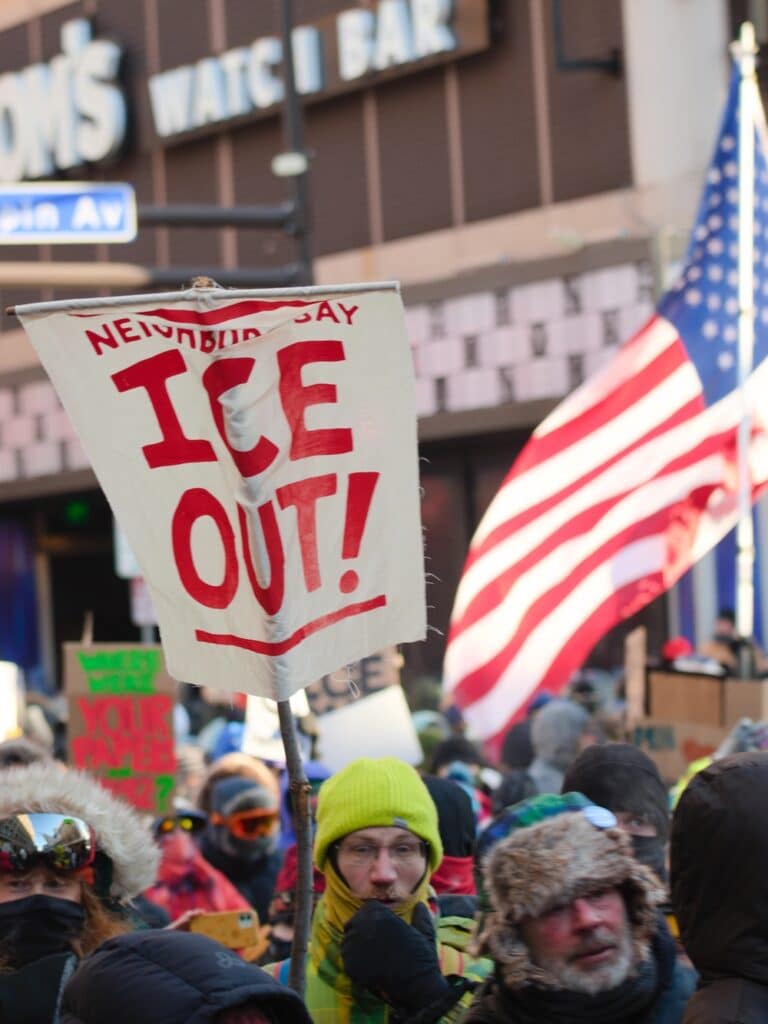
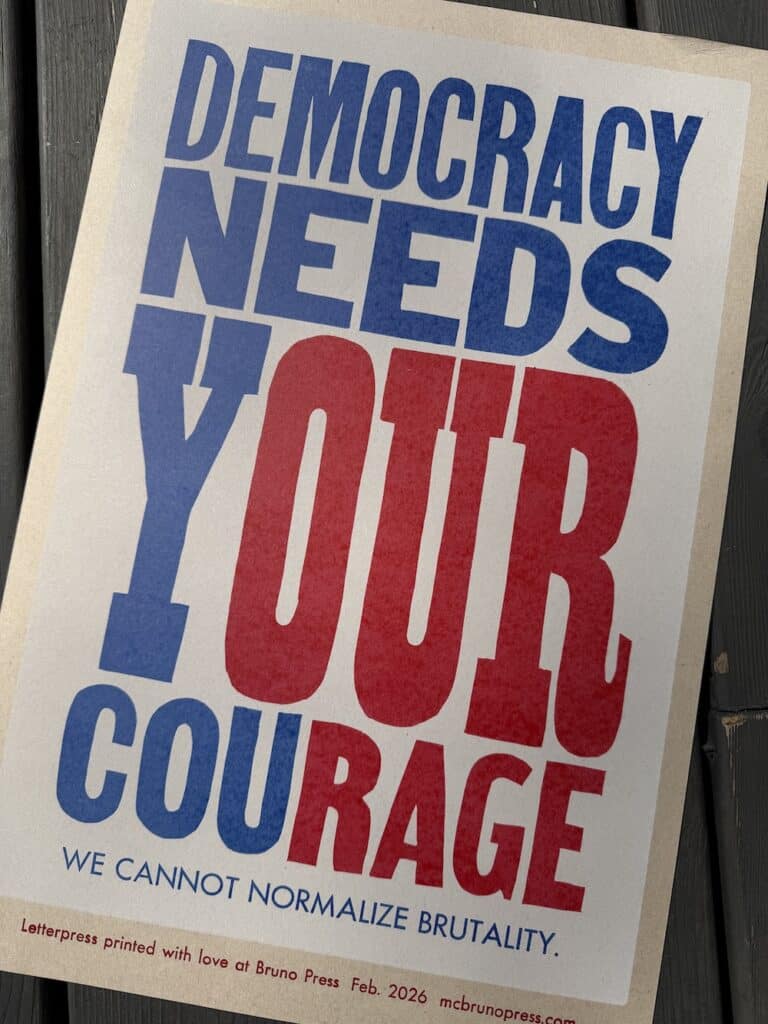
Minnesotans have practice relying on each other and building trust through long winters, deepened by the uprising following the 2020 murder of George Floyd. While not everyone has snow to shovel for each other, now is the time for all of us to create the networks we will need to rely on for the next natural disaster or another assault on human and constitutional rights. Start a text thread dedicated to daily mutual aid in your neighborhood. Make it fun and light. Build trust. Who needs a stick of butter? Who wants to have coffee on our front steps this morning? Who needs help picking up kids or feeding pets? Starting with connections with our neighbors, Minnesotans demonstrated the power of hyper-local community care and shifting our thinking about who we are bound to, what binds us together, and what collective action and solidarity can look like.
~~~
Find your niche and do your thing!
One of the most visible examples of block-by-block rapid response that filled social media and news feeds was that people of all ages and from all walks of life, wearing high-visibility vests and whistles around their necks, stood guard at schools and daycares in response to raids in their neighborhoods. (It’s estimated that over 33,000 Minnesotans took Constitutional Observer training.)
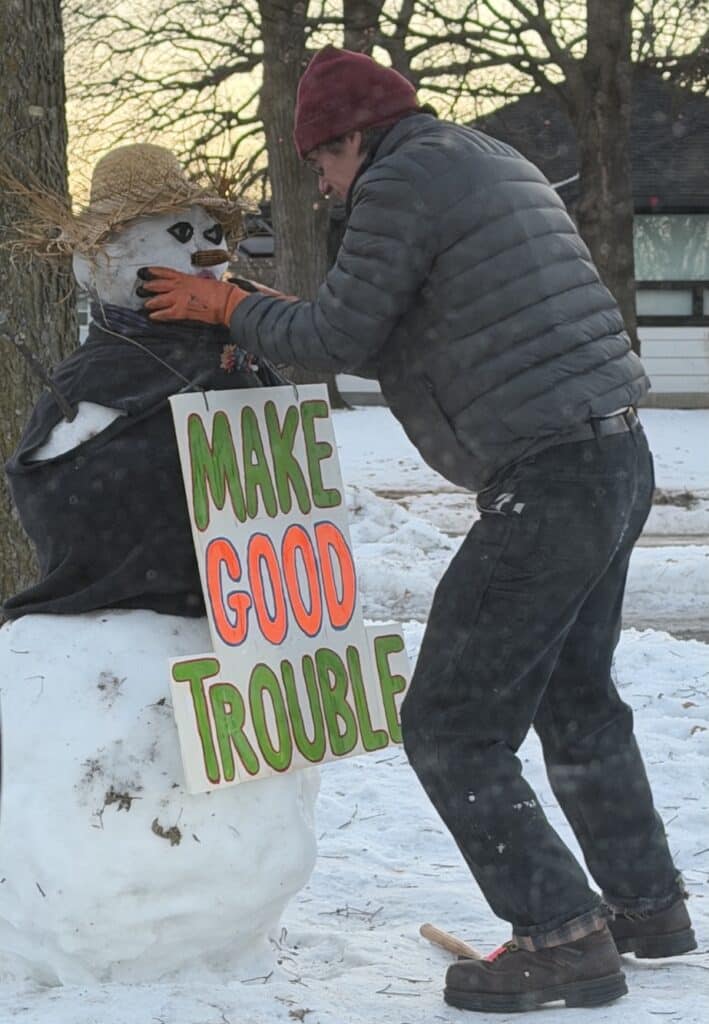
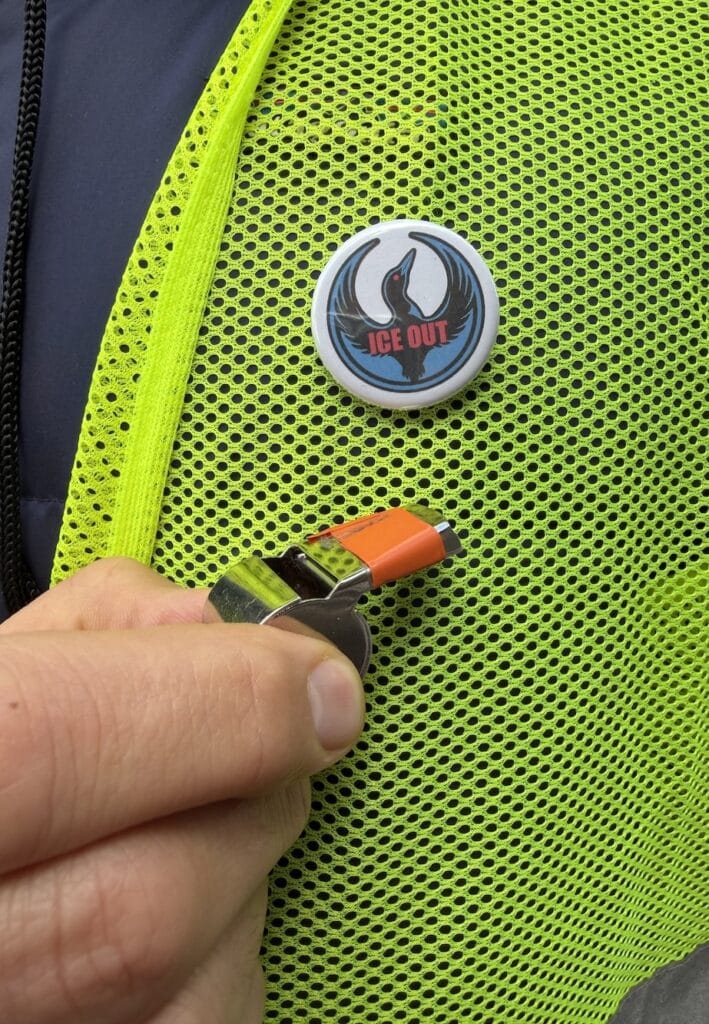
Harder to see from afar were thousands of discrete, individual acts of community care – each a thread woven into the strong web of resistance: Midwives and nurses quickly established emergency text threads to coordinate attending births or caring for postpartum mothers and babies at home when hospitals became targets. Retirees and parents at home with young kids washed the laundry of families who were sheltering in place when laundromats became unsafe. People with vans and tinted windows gave safe(r) rides to school and work for more vulnerable community members. Those who are more tech-savvy built databases and websites to gather and distribute information, and hosted living-room trainings for those learning Signal and other online organizing tools. Innumerable food banks popped up that ranged from serving a few families on the block to coordinating the delivery of groceries to tens of thousands of homebound people. Money was quietly moved to those in crisis through Venmo, GoFundMe, and envelopes of cash tucked into mailboxes.
Like a robust ecosystem, each person found a place to apply their resources, strengths, and capacity, no matter how “small.” In aggregate, it was a stunning mosaic demonstrating the incredible power of disaggregated resistance, mutual aid, and community solidarity. Often described as leaderless, the truth is that the resistance we are observing, and that we need to keep building, is one that is leader-full!
~~~
“It’s OK to Change Your Mind”
“It’s OK to change your mind” is a line from a song written by Annie Schlafer this winter and activated by members of the Singing Resistance. It was sung by thousands outside of the hotels where federal agents were staying in Minneapolis. The song and the actions were inspired by the Serbian civil resistance movement Otpor, which focused on winning over members of Milošević’s security forces and inspiring them to “change sides,” welcoming them and recognizing them as victims of the same oppressive regime.
Empathy can be hard to access in the face of violence, but our movements can only get smaller and weaker the more we slide into othering, canceling, and purity testing. The Minnesota resistance called in and activated thousands of people who were brand-new to civic engagement or organizing, and instead of “Where have you been?” everyone was greeted with a “We’re glad you’re here!”
~~~
More destabilizing events, unrest, and chaos are likely in the years ahead. Planning and building for resiliency will need to include strong, local, connected, and responsive community networks. We will need lessons and examples to remember forward, and the resistance in Minnesota will join the many chapters of history that have something powerful to offer.
Photos by Lynn Hoffman. “Neighbors Say ICE Out” photo by Fibonacci Blue, CC BY 4.0, via Wikimedia Commons, cropped from original.


