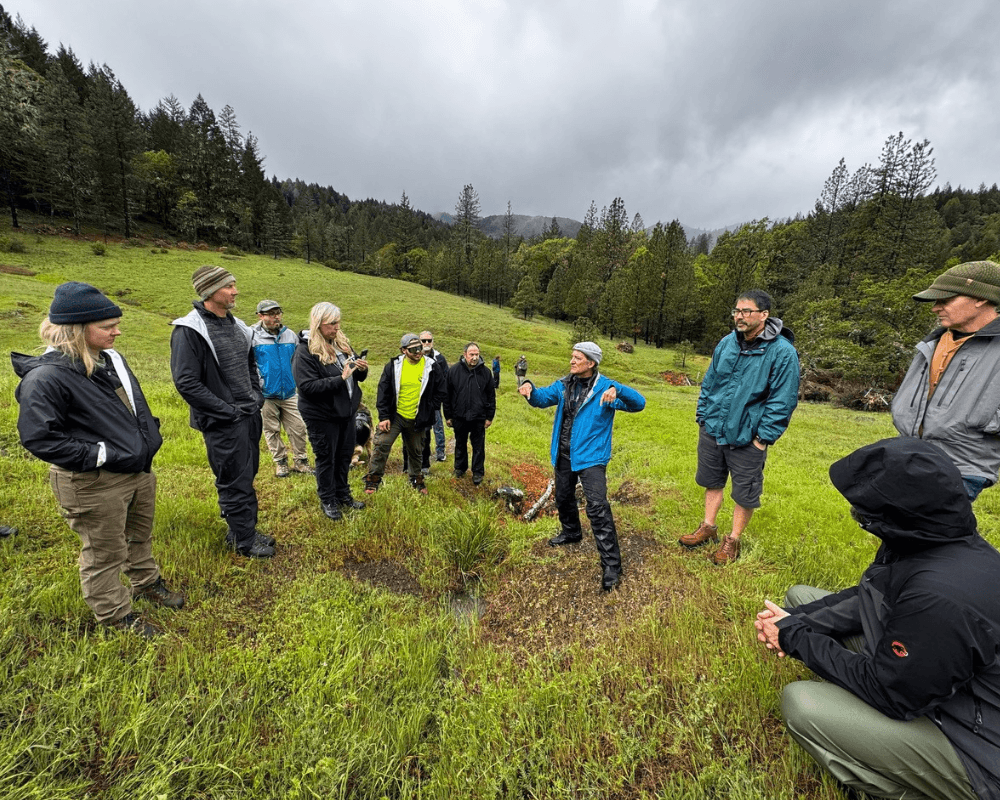
Brock suggesting new locations for check dams during a field trip at Cahto Creek Ranch at the 3rd Annual Forest Health Extravaganza and co-sponsored by the ERRP Native Grass Committee. The group gathered to look at gully erosion control and talk about hydrologic restoration
Photo credit: Pat Higgins/Eel River Recovery Project
Spring is a season of intersections. In our neck of the woods, the burn season sees its last flames just as the rainy season ends; the hills are winter-green, but the coming fire season whispers from our still-overstocked forests. As we move to our dry season, our fire fears and water woes come back into focus, making spring the perfect time to embrace a Fuels to Flows state of mind.
As follows, this season, our campaign built continued momentum at the intersection of watershed resilience and fuel load reduction. Our team has strengthened partnerships, laid the groundwork for new training initiatives, consulted on beneficial biomass projects across Sonoma, Marin, Napa, Mendocino, and Humboldt Counties, and garnered community support for holistic updates to the California Vegetation Treatment Program, which integrates statewide beneficial biomass reuse.
Alongside that, in the past few months, our team has shared the Fuels to Flows toolkit across California to hundreds of people, continuing to demonstrate how process-based restoration builds watershed resilience while simultaneously reducing the risk of catastrophic fire. Brock Dolman, WATER Institute Co-Director, presented at the 3rd Annual Forest Health Extravaganza, the 43rd Annual Salmonid Restoration Conference, KMUD Radio, the Community Potluck with Camp Meeker Social Club, the Stewardship Network, and the Wildfire Mitigation Leadership Summit with Fire Safe Sonoma.
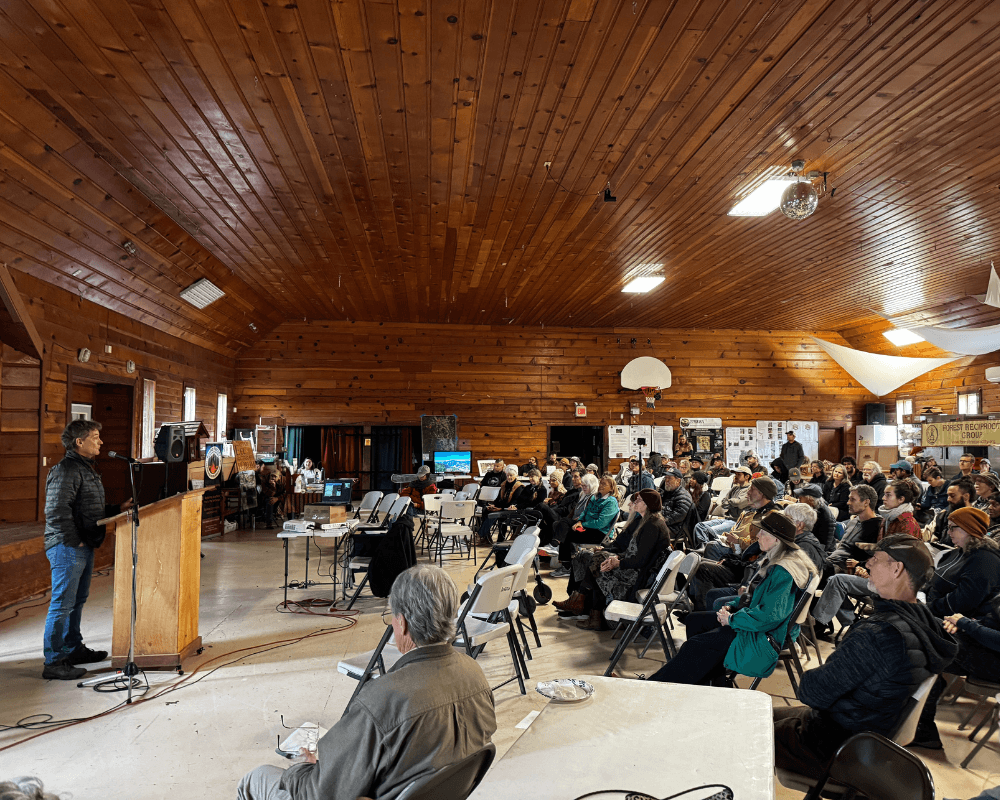
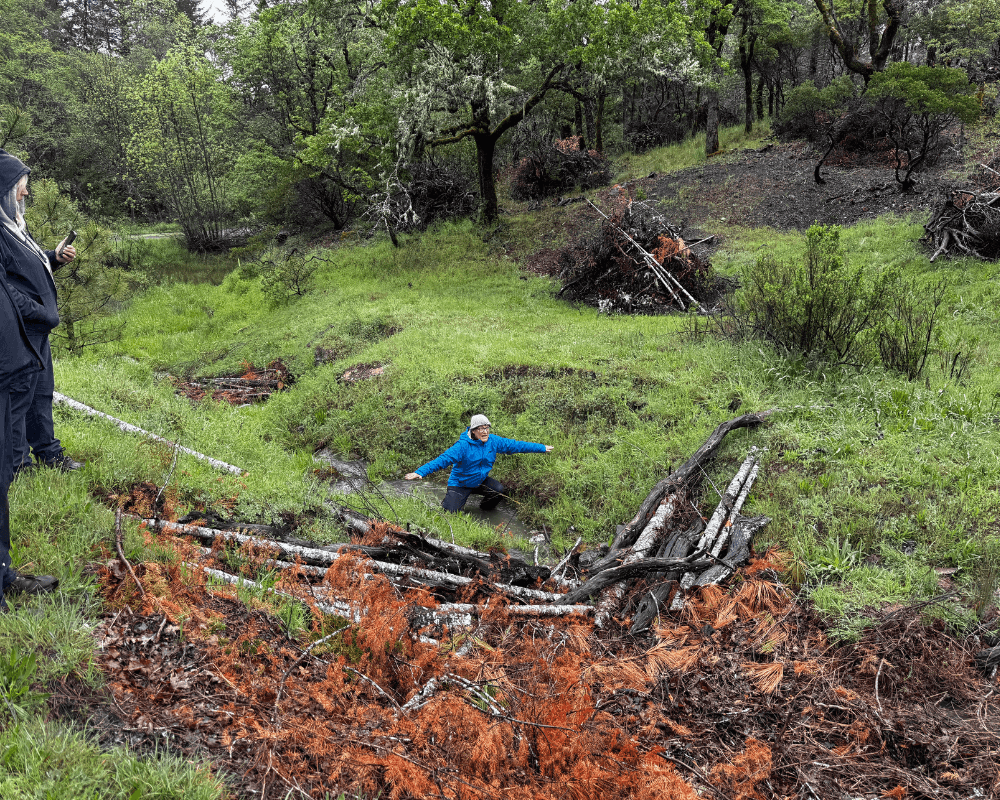
At the 3rd Annual Forest Health Extravaganza, Brock shares a plenary talk (left) and suggests another location for a check dam during the Cahto Creek Ranch field trip (right). Photo credit: Pat Higgins
Brock’s plenary talk at the 3rd Annual Forest Health Extravaganza in Laytonville, California, demonstrated the relevance of Fuels to Flows methodologies to attendees who work in forest restoration, cultural fire, river and fish stewardship, as well as to neighbors and landowners learning how to bring resilience to their wildfire-prone lands.
At the 43rd Annual Salmonid Restoration Conference in Redding, California, Brock shared two timely presentations that contributed important thought leadership at a convening focused on the intersections between fish and fire, water quality and quantity, and other salmonid and watershed restoration topics. In Fuels to Flows: Bringing Nature-based Stewardship to the Headwaters, he shared how reintegrating “fuel” load materials into the “flows” of water, carbon, soil, and life rehydrates landscapes and creates fire-resilient forests. In Stormwater: Slowing, Spreading, Stuffing, Sinking, Storing, and Sharing it to Save Salmon, Brock highlighted OAEC’s three decades of “Conservation Hydrology” work, which orchestrates collaborative stormwater solutions to accelerate and scale salmonid recovery.
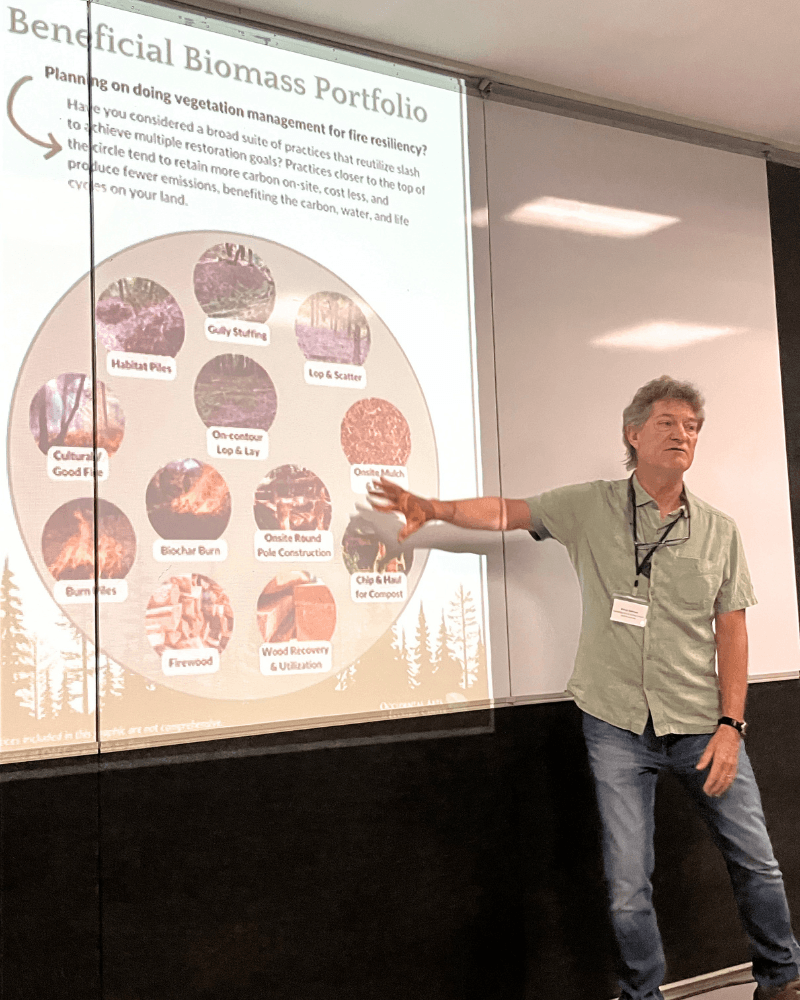
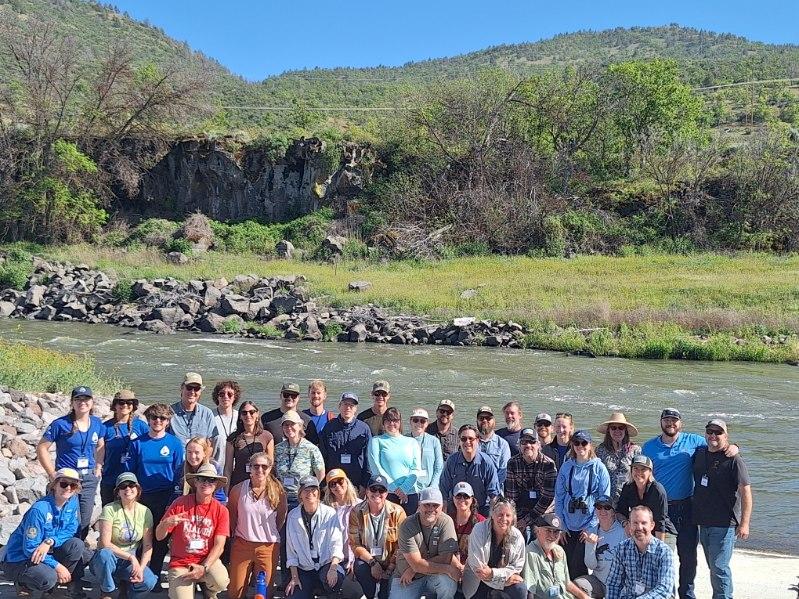
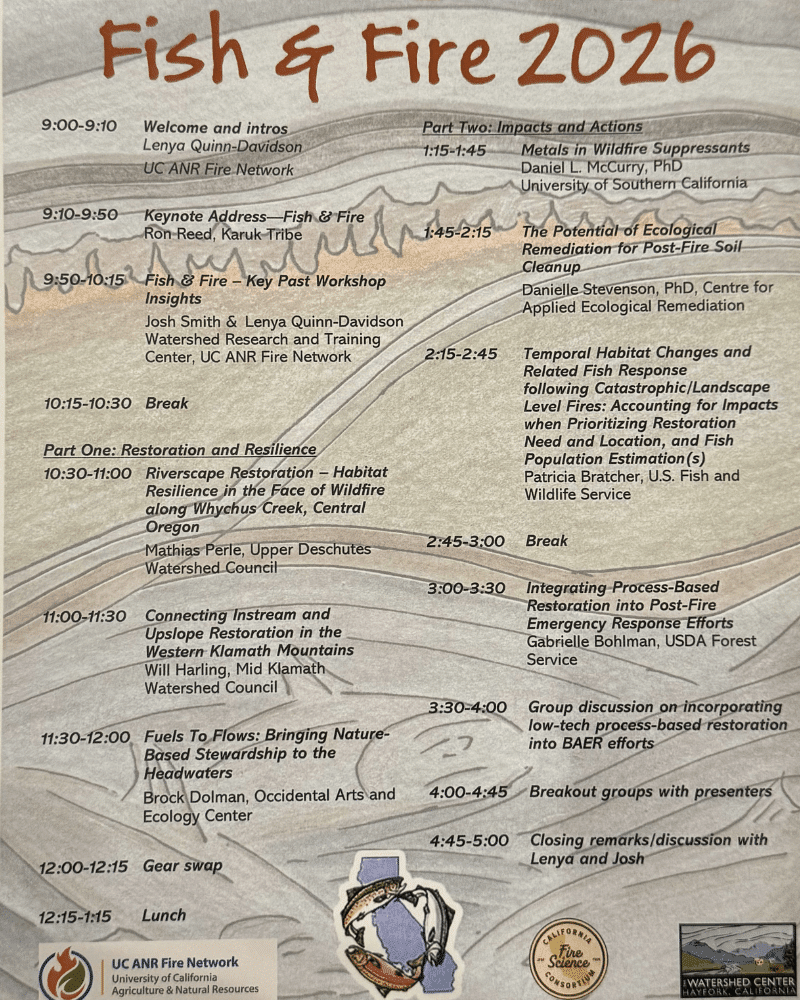
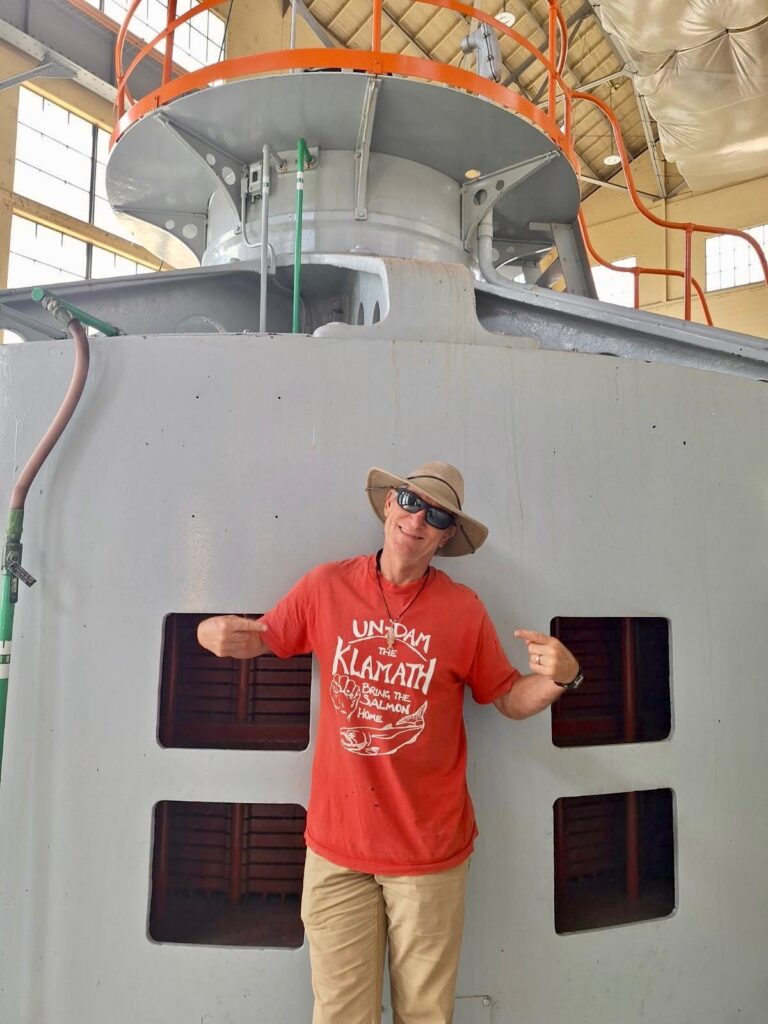
At the 43rd Annual Salmonid Restoration Conference, Brock presented about Fuels to Flows during the Fish & Fire 2026 Workshop (top) and toured defunct powerhouse turbines along the recently undammed Klamath River (bottom). Photo credit: Grey Hayes/OAEC (top) and Bob Pagliuco/NOAA.
Meanwhile, Kate Lundquist, WATER Institute Co-Director, is also sharing our useful Fuels to Flows methodologies during a rich, international exchange with process-based restoration partners in France. There, communities are increasingly experiencing wildfires driven by intersecting forces that are all too familiar to us Californians: degraded hydrologic systems, densely stocked upland forests, and climate change-induced heatwaves and drought. As we strengthen our campaign in California, we see the global resonance and value this international cross-pollination.
In May, Brock will share another Fuels to Flows presentation at SERCAL 2026: Adaptive by Nature: Restoring in an Era of Uncertainty in Fortuna, California. This annual convening brings together hundreds of ecological restoration practitioners who are ready to advance the science, art, and practice of restoring California’s native and unique habitats.
Stay tuned in the months ahead for more Fuels to Flows education and advocacy initiatives that integrate the fire, water, and carbon cycles.
Watch Fuels to Flows with the Stewardship Network


