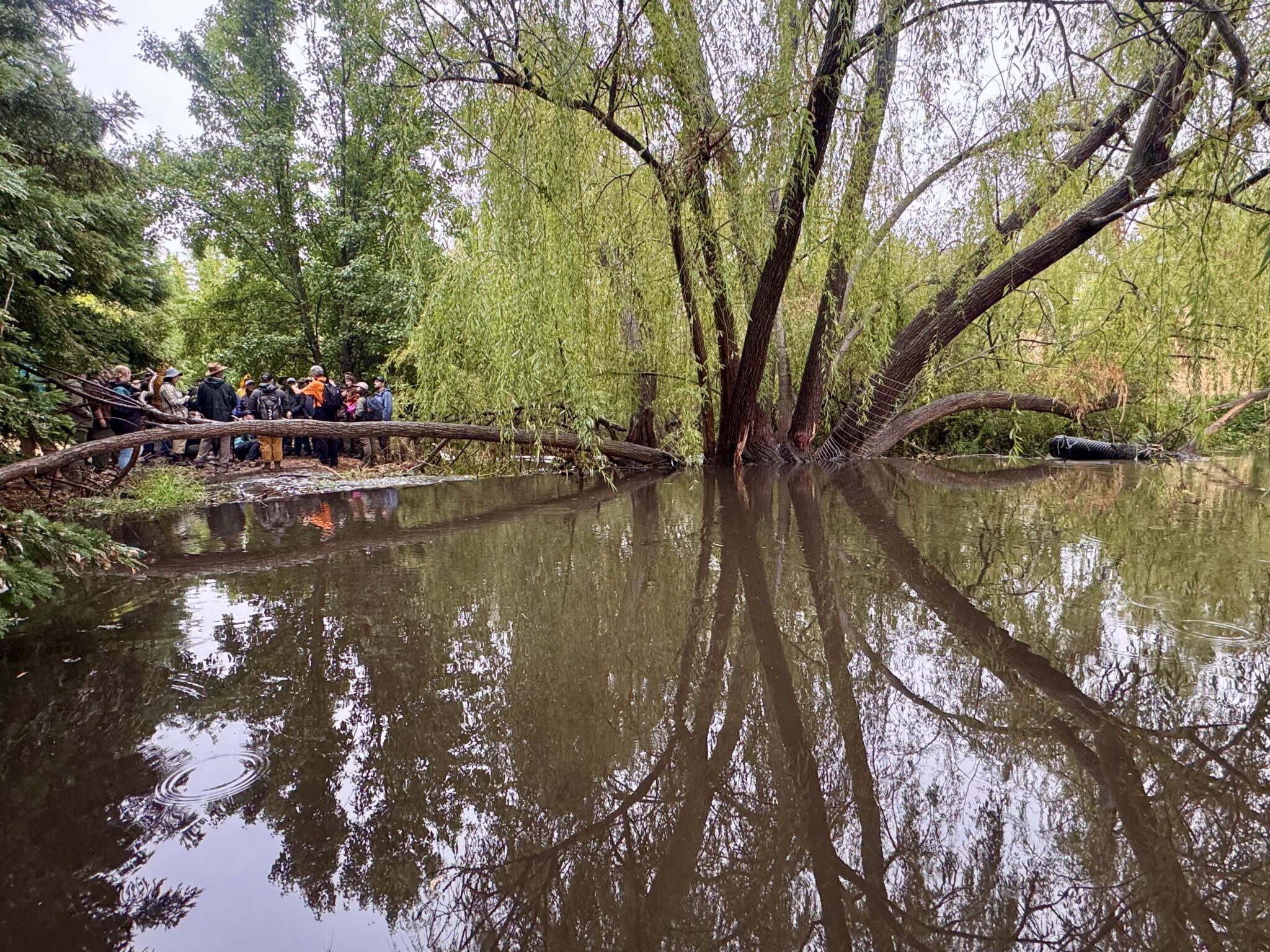
Last fall, our BeaverCorp trainees installed Flexible Pond Levelers in this suburban neighborhood stream in the Sierra Nevada foothills. Beaver have continued building throughout the winter, and we’re pleased to say that the pond levels behind each dam are maintaining at the level set during our fall training (pictured here). Photo: Brock Dolman/OAEC
The California Beaver Help Desk launched this fall, and we’ve been busy supporting statewide coexistence projects ever since. We’re fielding new inquiries each week and responding with free site assessments to support land managers experiencing human-beaver conflict. Last month, we delivered our first landowner stipend to a rancher along the Tuolumne River!
We’re honored to support the human communities most impacted by beaver activity, while also ensuring that beaver can bring their watershed restoration and climate change resilience benefits to these same places.
To meet the new demand for coexistence support, we are collaborating with our partners at the Beaver Institute to develop a highly skilled Californian workforce of Certified Beaver Coexistence Professionals. As of late January, our BeaverCorps tuition subsidy program came to a successful close with the allocation of 28 tuition waivers. The cohort is making great progress with several trainees actively conducting site assessments in partnership with landowners.
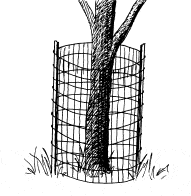
Our first landowner stipend recipient—a rancher along the Tuolumne River—hired a recent BeaverCorps graduate. With landowner input, this beaver coexistence professional will create a site-responsive plan and install protective fencing around select trees. This installation will allow beaver to stay in their native habitat while curbing their tree-felling.
Many more projects are underway throughout California, currently in the assessment and planning phases. We can’t wait to see this dynamic, highly skilled cohort of beaver coexistence professionals continue this work through projects emerging in the Delta, the Central Valley, the foothills, and the eastern Sierra Nevada!
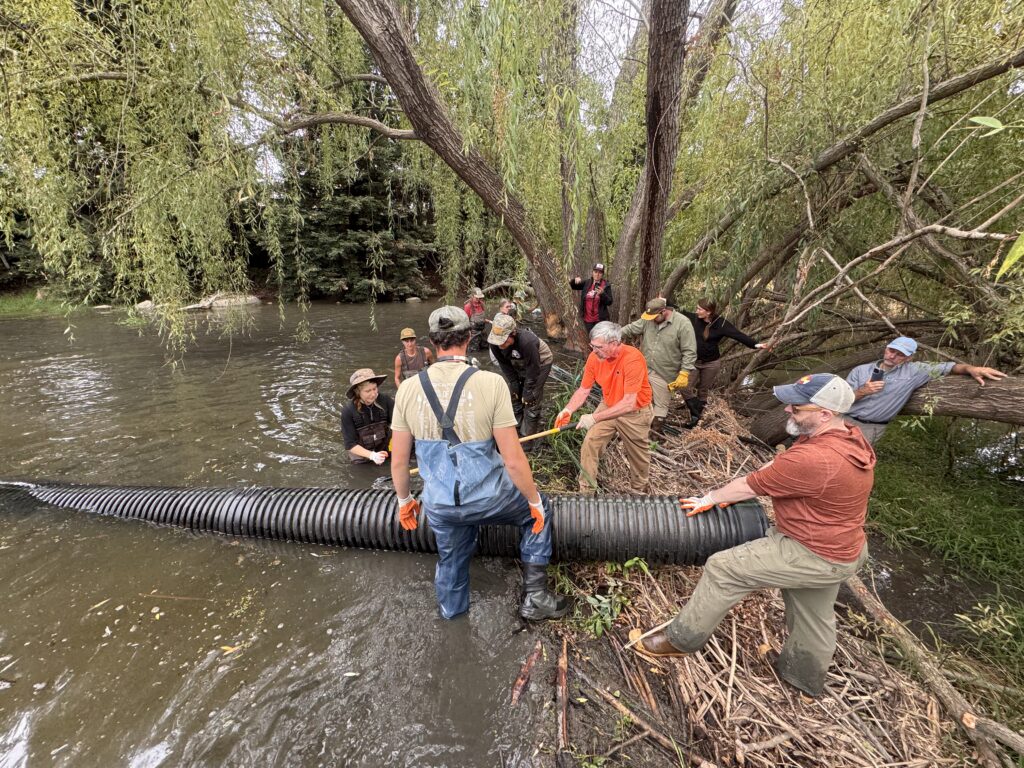
BeaverCorps trainees and instructor Mike Callahan and Aaron Hall from the Beaver Institute give guidance on the installation of a Flexible Pond Leveler device in an El Dorado Hills neighborhood during last fall’s Coexistence Training and Tour. Photo: Brock Dolman/OAEC
Alongside emerging projects, we’re also checking on project sites from last season’s Coexistence Training and Tour.
In El Dorado Hills, both previously installed Flexible Pond Levelers are holding up well. As expected, beavers sealed the breach around the pipe and have mostly stopped building up the dam around it. In turn, the pond levels behind each dam are being maintained at the level set during our fall training.
At Cosumnes River Preserve, a managed wetland in the Sacramento-San Joaquin Delta, the Fence and Pipe Flow Device has functioned smoothly through the winter rainy season—deterring beaver activity and enabling wetland managers to effectively regulate water levels as they fluctuate throughout the day and seasons.
The Beaver Back Saver installed at this site is also performing well, after a slight adjustment to the flash boards, which needed to be repositioned after the installation to create a water-tight seal.
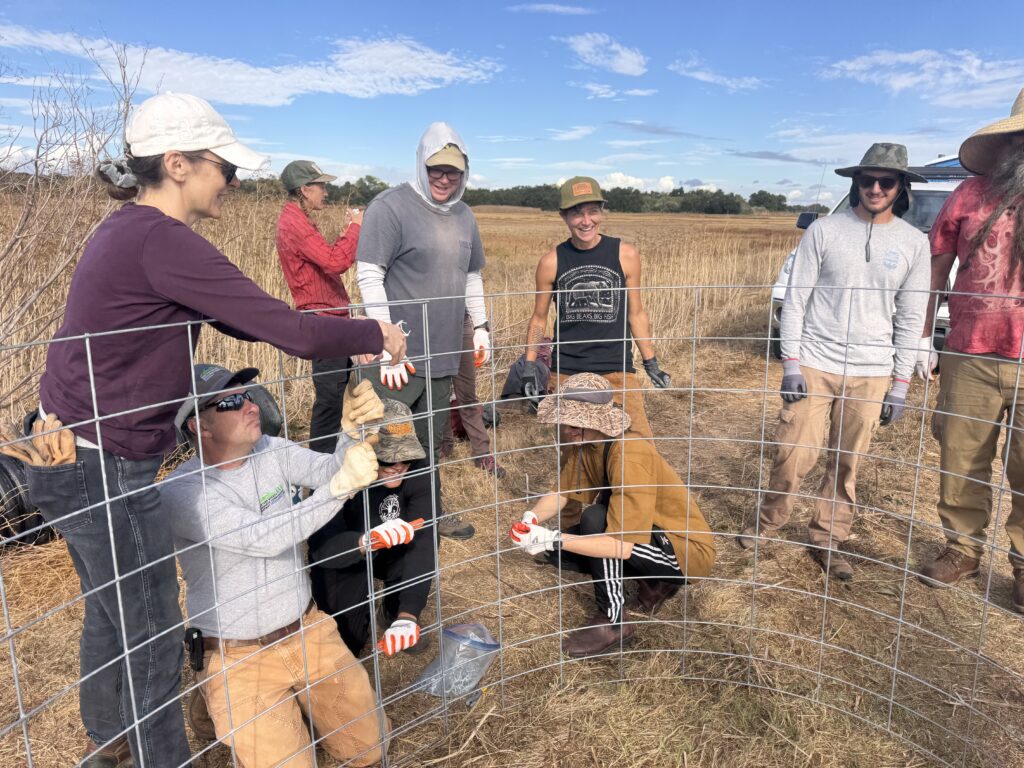
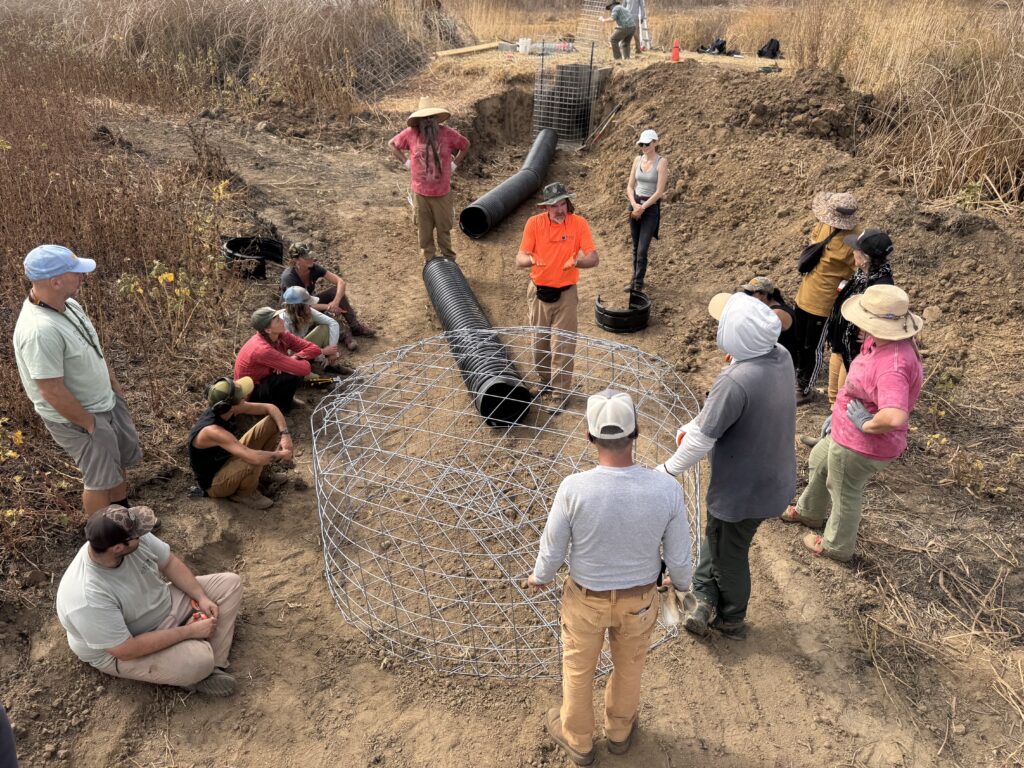
BeaverCorps trainees prepare a Fence and Pipe Flow device for installation (left), and Mike Callahan of Beaver Institute teaches proper installation technique (right) at the Cosumnes River Preserve during last fall’s Coexistence Training and Tour. Photo: Brock Dolman/OAEC
We can’t wait to see more beaver coexistence projects emerge over the next year. If you would like technical or financial assistance to mitigate human-beaver conflict on land you manage, visit our California Beaver Help Desk. There you can find effective coexistence resources, seek free technical assistance, and apply for cost-sharing support.
The California Beaver Coexistence Training and Support Program is a partnership between the WATER Institute at Occidental Arts & Ecology Center, the Beaver Institute, and the California Department of Fish and Wildlife, whose Nature Based Solutions: Wetlands and Mountain Meadows Grant Program makes this work possible.


