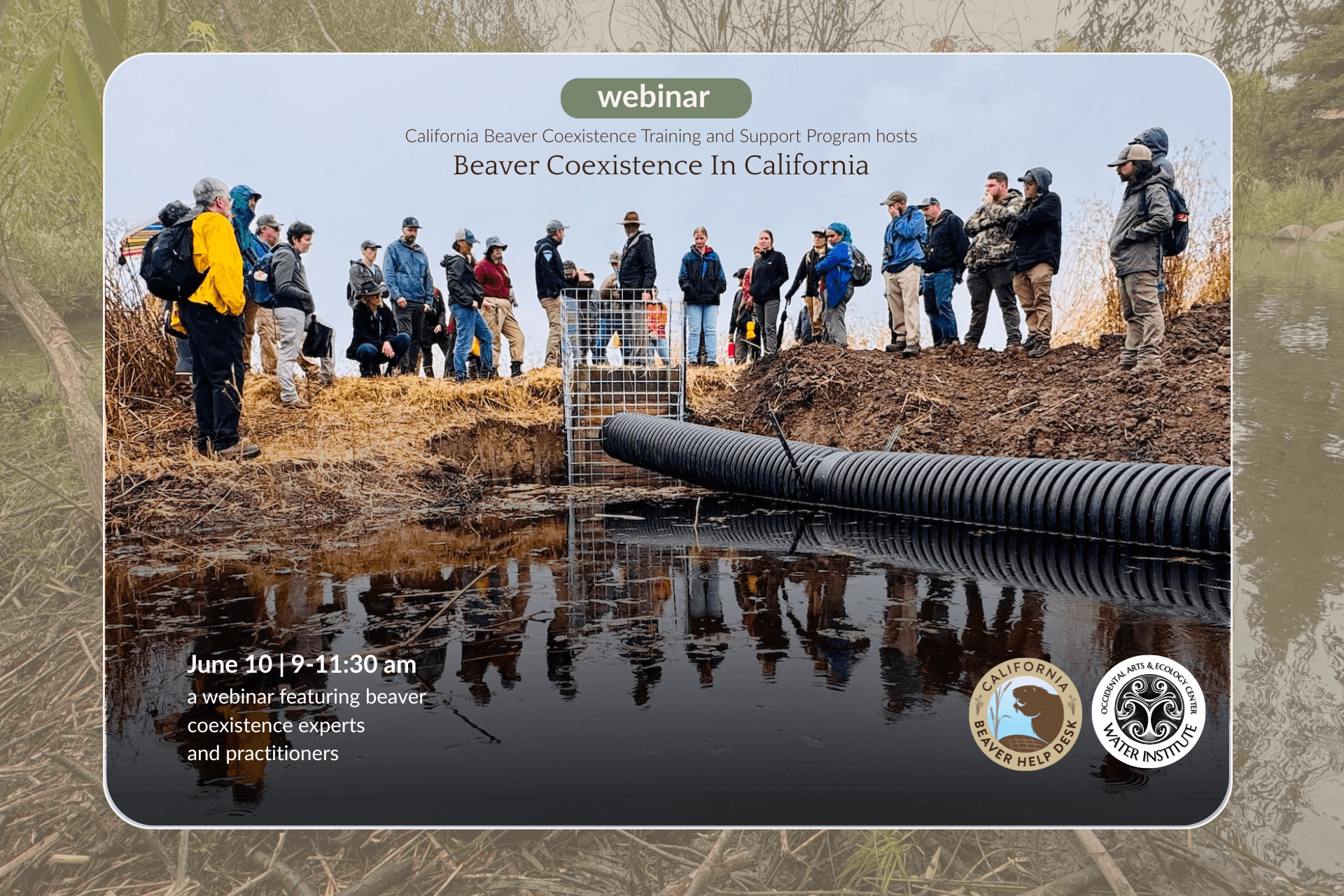
This June, the California Beaver Coexistence Training and Support Program presented our 2nd annual webinar featuring coexistence experts and practitioners. Attendees joined from government agencies, nonprofits, irrigation districts, farms, restoration groups, and local communities to learn how human-beaver coexistence can deliver benefits across California.
Watch the Webinar

As this year’s webinar started, participants first heard about the California Beaver Help Desk from Grey Hayes, Beaver Coexistence Program Manager at Occidental Arts & Ecology Center. Our new landowner support tool, launched last fall, provides technical and financial assistance for those ready to expedite beaver solutions—from almond growers looking to curb tree felling, homeowner association leaders concerned about potential flooding, wetland managers managing clogged culverts, and ranchers working with beaver to holistically enhance their working lands.
The webinar also featured presentations and discussions with two of the state’s leading beaver coexistence professionals: Cathy Mueller with Connected Ecology and David Krawitz-Greenspan of Wet Meadows Institute, who each shared case studies on coexistence. They shared about the myriad benefits of living alongside beaver and practical, time-tested solutions that land managers can use, while also acknowledging potential challenges and how we can navigate them together.
As the webinar continued, the Beaver Institute’s Aaron Hall went on to describe the longstanding efficacy of beaver coexistence efforts in the United States and how coexistence in California fits into the larger national context. Molly Alves from the California Department of Fish and Wildlife’s Beaver Restoration Program offered updates about the program and illuminated the broader context of beaver restoration in California, answering pressing participant questions about beaver translocations and updates to the statewide beaver depredation policy. This was followed by Alex Heeren of CDFW’s Human Wildlife Conflict division, who shared various pathways for reporting human-wildlife conflicts and the most common human-beaver conflicts in California.
Our 2nd annual webinar continued to connect a dynamic web of collaborators while providing a well-rounded array of resources for land managers who would like to coexist with beaver to bring holistic benefits to the lands they live and work on.
For anyone who missed the live offering, the recording is available here and the presentations are available for download here.
Are you ready to get started with beaver coexistence?
Visit the California Beaver Help Desk.
This webinar is made possible through the Nature Based Solutions: Wetlands and Mountain Meadows Grant from the California Department of Fish and Wildlife.


