About Fiscal Sponsorship at OAEC
OAEC brings over 25 years of experience supporting ecological, community-based, and social change initiatives through fiscal sponsorship. What makes OAEC unique is our relational and values-driven approach and three decades of leading our own demonstration, research, advocacy, and policy programs. We pair practical organizational experience and support with thoughtful, participatory partnership tailored to each project.
Unlike larger fiscal sponsorship institutions, OAEC’s small scale allows us to provide a unique balance of structure and flexibility, prioritizing collaborative relationships and minimizing unnecessary administrative burden.
Visit the Become a Project page for more information on how to become a fiscally sponsored project with OAEC.
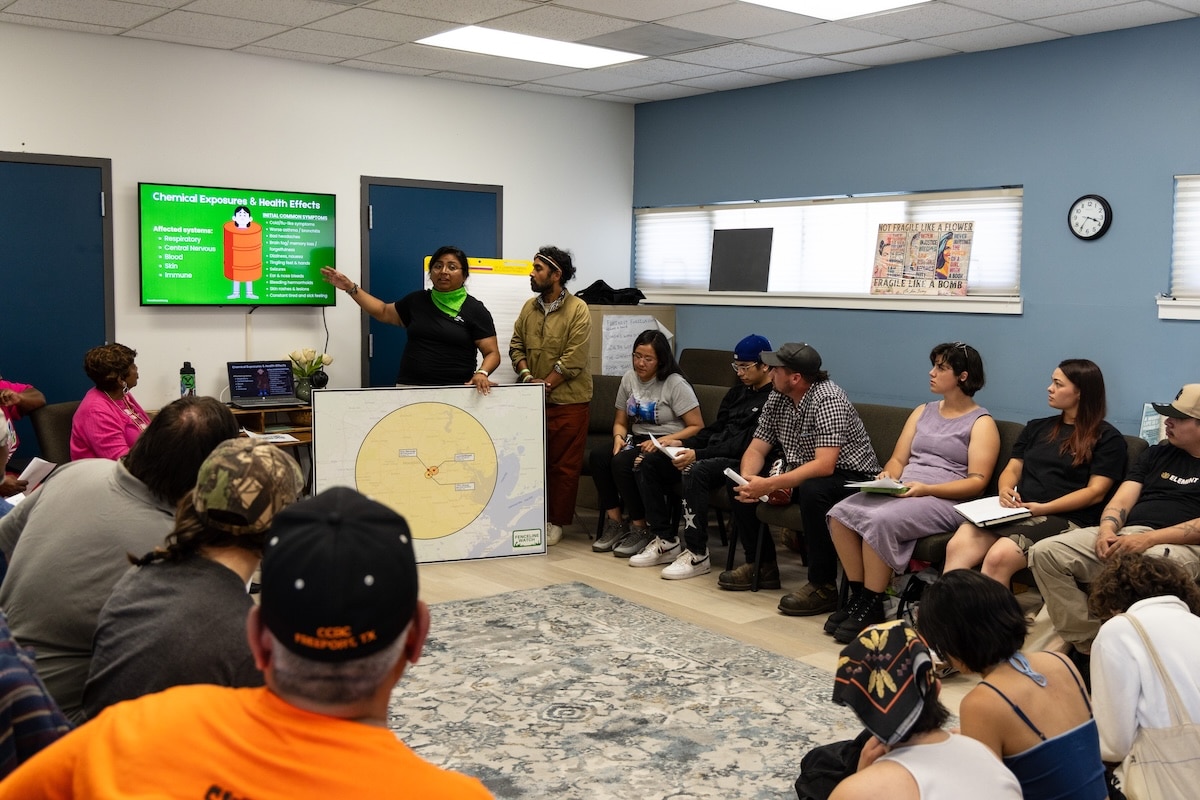
“In these challenging times, having OAEC assist Fenceline Watch with the critical organizational support has given us the ability to focus on innovative advocacy strategies and growth efforts, with the assurance that our organization is in good hands. OAEC provides us with the agency to lead our projects, and key support in strategy and development when we need it.” ~ Yvette Arellano & Shiv Srivastava, Current Project Fenceline Watch
Fiscal Sponsorship 101
Fiscal sponsorship is a contractual arrangement in which a project operates under the legal and nonprofit status of an existing 501(c)(3) organization. OAEC primarily offers “Model A” fiscal sponsorship, through which mission-aligned projects become part of OAEC’s nonprofit structure, allowing them to receive charitable donations and grants without having to form and manage their own stand-alone nonprofit. OAEC provides services such as accounting, payroll, HR, insurance, tax and legal compliance, and grant administration, enabling projects to focus more fully on work in their communities.
OAEC approaches fiscal sponsorship as a powerful movement-building strategy. By sharing nonprofit infrastructure, fiscal sponsorship can help mobilize resources for emerging community-led initiatives and strengthen long-term capacity for social and ecological change.
To learn more about fiscal sponsorship and the different models that exist, we recommend this overview from Social Impact Commons.
Who We Sponsor
OAEC fiscally sponsors projects that align with our mission of supporting communities to build a more just, resilient, and ecologically regenerative future. We celebrate the diverse expressions of this work and support a wide range of projects working across issue areas, geographies, and stages of development. We encourage prospective projects to take a look at our current and former fiscally sponsored projects to get a sense of the kinds of initiatives that fall within OAEC’s wheelhouse.
Because projects operate under OAEC’s nonprofit umbrella, their work must further OAEC’s 501(c)(3) mission, and we must have the internal capacity to provide the support needed. Other factors we consider when assessing fit include the nature and location of the project’s activities and the people involved in carrying out the work. We also review the project’s anticipated budget, fundraising plans, staffing structure, and operational needs.
If you think your project might be a good fit or have questions, we encourage you to reach out for a conversation. Every project is different, and our team is happy to explore alignment and possibilities together.
Please note we are not able to say “yes” to every inquiry. If OAEC is not the right fit, the Fiscal Sponsor Directory may be a helpful resource for identifying other organizations offering fiscal sponsorship.
Fiscal Sponsorship Program FAQ
Projects must align with OAEC’s charitable 501(c)(3) mission and fall within the operational and legal scope of our fiscal sponsorship program. Please see the “Who We Sponsor” section above to learn more about some of the factors OAEC considers when assessing fit. Even if you’re unsure, we encourage you to reach out for a conversation.
No. Some projects come to OAEC with a portfolio of existing grants, while others are just getting started. Either way, we will want to understand your vision, goals, and anticipated funding strategy.
No. OAEC does not generally charge a start-up fee to become a fiscally sponsored project, but it might be a point of discussion for some projects with complex onboarding.
No. OAEC works with projects at a range of sizes and stages of development. Current or anticipated revenue is one factor we consider alongside mission alignment, operational needs, and overall fit.
OAEC charges an administrative cost share to support the staffing, systems, infrastructure, and organizational capacity required to fiscally sponsor projects. Our standard administrative cost share is 10% of all revenue received by the project. Administrative fees are charged upon receipt of funds (we do not charge an administrative cost share on expenses).
In some cases, the administrative cost share percentage may shift based on the complexity, revenue volume, and support needs of the project. Additional details can be discussed during the intake process.
Please note that this list is not comprehensive. OAEC’s services may vary by project and are finalized through the intake and onboarding process.
- 501(c)(3) Tax-Exempt Compliance – Serve as the project’s legal and corporate home, enabling the project to receive charitable donations and grants without forming an independent nonprofit.
- Accounting, Bookkeeping & Reporting – Financial reports, expense tracking, bill payment and reimbursements, revenue deposits, reporting, credit card administration, and support maintaining accurate financial records.
- HR, Payroll & Employee Benefits Management – Support with employee onboarding, payroll processing, benefits administration, and HR compliance for project staff.
- Administrative Support for Grants & Donations – Processing and administrative support for charitable contributions, grant funds, and invoices.
- Insurance Coverage – Provide General Liability insurance for standard approved activities and Workers’ Compensation coverage for employees. Projects are responsible for any additional insurance needed for specialized activities.
In most cases, yes. Projects can engage in direct and indirect lobbying activities on legislative matters at any jurisdictional level, depending on the nature and scope of the work. No 501(c)(3), or its projects, can engage in advocating for or against a candidate for any office. We require that projects discuss any planned lobbying activities with OAEC in advance to ensure alignment with our mission, legal requirements, and applicable tracking and reporting procedures.
OAEC does not directly fund or fundraise for fiscally sponsored projects. OAEC provides administrative support related to grants and donations, as well as occasional strategic guidance when appropriate.
Due to the complexity and compliance requirements often associated with public funding, OAEC is generally not able to receive and manage government grants for fiscally sponsored projects. In very limited cases, we are able to receive public funding on behalf of a project, however, a higher administrative cost share is typically required.
Under Model A fiscal sponsorship, projects operate as part of OAEC’s nonprofit organization, much like an in-house program. Under Model C sponsorship, projects remain separate legal entities while partnering with OAEC to receive charitable funds as a grantee. OAEC primarily offers Model A fiscal sponsorship, with Model C opportunities available in select cases.
To learn more about the differences between these models, we recommend this resource from Social Impact Commons.
Generally, no, because OAEC primarily offers Model A fiscal sponsorship. Under Model A fiscal sponsorship, projects operate as part of OAEC’s nonprofit organization and therefore cannot already exist as separate legal entities, including incorporated nonprofits, LLCs, C corps, S corps, etc., in any state.
From initial exploration conversations through systems setup and onboarding, the process of becoming a fiscally sponsored project typically takes between 1.5–3 months. But it depends on project complexity, timing, and readiness. Learn more about the process of becoming a fiscally sponsored project.
OAEC is based in California and is currently registered to employ staff in some additional states. If your project has employees (including remote) or primary activities outside of California, please be sure to mention this during our initial conversations so we can assess feasibility early in the process. This includes employees who work remotely and may live in other states, even if programming is based in California.
At this time, OAEC is not able to employ staff for fiscally sponsored projects who are based outside of the U.S., although working with international contractors is possible.
Yes. Fiscally sponsored projects of OAEC may hire independent contractors to perform work in support of the project’s charitable purpose.
For some projects, fiscal sponsorship serves as a bridge toward establishing their own standalone 501(c)(3). Other projects may never want to take on the administrative complexity of incorporating as an independent nonprofit, and instead choose to remain in long-term fiscal sponsorship at OAEC because sharing infrastructure and resources makes sense for their work. Projects may terminate their fiscal sponsorship relationship with OAEC according to the terms of the agreement, typically with 60 days’ notice.
If you have additional questions about fiscal sponsorship at OAEC, please email our FSP team.


